Resurfacing and Brightening: The Dream Team for Radiant Skin
When patients sit down in your treatment room and whisper those familiar words: “I just want my skin to look better,” they’re usually talking about two things: tone and texture. These are the skincare world’s dynamic duo of concerns. Brightening treatments are designed to even out the skin’s tone, while resurfacing treatments tackle both tone and texture. Put them together and you’ve got the skincare equivalent of peanut butter and jelly: better together and far more satisfying.
Thanks to Face Reality®, BioSkin Aesthetics, Celluma LED Light Therapy, M.A.D Skincare, KM Herbals, SESHA Skincare, Anna Lotan PRO, Nature Pure Labs, and Silhouet-Tone for sponsoring this content.
Let’s Talk Texture – 3 Popular Resurfacing Options
Resurfacing is all about smoothing the skin’s surface and repairing the structural damage that comes from sun, trauma, acne, or simply living long enough to have a birthday cake with more than 40 candles. It can be achieved with three modalities: chemical, mechanical, and thermal.
1. Chemical Resurfacing
Chemical peels are a long-time industry favorite because they deliver results that are both immediate and cumulative. Whether it’s a glycolic or lactic peel for mild brightening, or a deeper TCA peel for stubborn pigment and wrinkles, peels accelerate cell turnover and reveal fresher, smoother, more even-toned skin. Retinoids deserve a seat at this table too, since they help remodel the skin over time.
‘Chemical peels increase collagen production by triggering the skin’s natural healing process after controlled injury, which stimulates fibroblasts to create new collagen and elastin. This increased collagen leads to improvements in skin firmness, resilience, elasticity, and helps reduce the appearance of fine lines and wrinkles, resulting in smoother and younger-looking skin.
“Our skin exfoliates on average every 28 days. As we get older, however, this cycle stretches to 30-40-50-60 days. Peeling should be performed when there is a reason to peel. There are light, medium, and deep peels that we can select from to accommodate and address specific skin concerns. When to peel, how frequent, and how deep all depends on what specific concern you’re addressing.
Peeling for hyperpigmentation is often directed at epidermal hyperpigmentation only versus dermal hyperpigmentation. The key driver when selecting peels for this skin concern is to not trigger the melanogenesis process during the treatment. All patients or clients will have a probability of post-inflammatory hyperpigmentation however during the peel/ treatment, its imperative to not induce the melanogenesis response.
In summary, selecting the right peel for your client begins not with the type of peel itself but with the client and the cause of their skin concern. Approach the client’s skin with a road map and plan to restore the skin’s barrier function, blemishes, cell turnover, and overall health to keep the skin looking great and improving upon it daily. ” Excerpt from L+A Article Picking The Right Chemical Peel For Your Client
Treatment Spotlight- Four Treatment Options from BioSkin Aesthetics
BioSkin Aesthetics offers the four treatment options for tone + texture that focus on brightening and retexturizing the skin.
The BioRePeelCl3® BLUE is a dual-phase topical TCA peel designed to revitalize, beautify, and moisturize the skin. It specifically targets the face, neck, and décolleté, delivering targeted action for enhanced skin quality.
BioTouch Precision™, a professional microneedling, dual FDA-cleared device that does not require numbing. It allows practitioners to infuse regenerative serums directly into the skin with pinpoint precision. This delivery system maximizes the penetration of active ingredients, setting the stage for meaningful cellular repair and renewal. Professionals can pair the device with the Sera RD Radiance Serum, a cosmetic formulation that is a mix of powerful active ingredients with beautifying and radiance-improving effect on the skin.
Lucente® is a treatment for hyperpigmentation from BioSkin Aesthetics that L+A’s Jenni Nagle tried to treat aggressive melasma on her forehead and a large spot on her cheek. Lucente® is an innovative brightening solution, consisting of an in-clinic treatment and home cream. BioSkin Aesthetics says, “Lucente® is a radical new product designed specifically for the treatment of Melasma, PIH, and similar forms of dynamic pigmentation.”

Treatment Spotlight – PRO Signature Brightening Treatment from Anna Lotan PRO
This radiance-boosting treatment combines the Carrotinol Enzymatic Peel + Penta Peel to provide a synergistic yet gentle approach to retexturizing and brightening the skin, finished with a Vitamin C Boost Mask for a truly luminous and revitalized glow.
The Penta Peel
An active exfoliating peel based on four AHAs (Malic Acid, Lactic Acid, Mandelic Acid, & Phytic Acid) and one PHA (Gluconolactone) to serve as a relatively mild, self-neutralizing exfoliator that is suitable for the gradual brightening treatment of skin with dark spots, uneven skin tone, and other signs of photo-aging.
Carrotinol Enzymatic Peel
A concentrated, penetration-enhancing lipogel, which effectively exfoliates dead cells from epidermal layers. Enzymatic Massage Peel.
Dermatologically tested! Hypoallergenic and suitable for sensitive skin.

2. Mechanical Resurfacing
Mechanical methods are the “hands-on” approach: think microdermabrasion, hydrodermabrasion, and dermaplaning. These treatments physically remove the outermost layer of the epidermis, taking dullness, surface pigment, and uneven texture with it.
“Microdermabrasion is a non-invasive exfoliating treatment that removes the outermost layer of skin, which helps lighten superficial pigmentation and improve skin texture.” – Dr. Chantal Lunderville’s 7 Tips To Treat Hyperpigmentation
The Glow Beyond E-Book on Microdermabrasion
The Glow Beyond E-Book is a must-read for professionals ready to refine their craft and elevate their services. Whether you’re just beginning your esthetics journey or already a seasoned expert, this resource delivers in-depth education on:
- Ideal candidates for microdermabrasion
- Contraindications and safety protocols
- Crystal vs. crystal-free techniques
- Real-world clinical applications
- How microdermabrasion supports regenerative skincare outcomes
From clarifying key concepts to guiding treatment customization, this guide empowers estheticians to achieve superior results through informed, intentional care.
3. Thermal Resurfacing
Laser and energy-based therapies represent the power players in this arena. A well-placed beam of light can break up pigment, vaporize damaged skin cells, and stimulate new collagen. IPL, fractional lasers, and CO₂ resurfacing all fall into this camp.
“To further elevate the skin resurfacing process, a CO₂ laser treatment was performed. This powerful laser technology is known for its ability to reduce fine lines, wrinkles, and scars while promoting new skin regeneration for a smoother, more youthful appearance.” – Burning Flesh To Glowing Skin In 7 Days
“Laser technology targets pigmentation by concentrating on melanin within the skin. The main types of lasers used are:
Ablative Lasers: CO2 and erbium lasers remove layers of skin, reducing pigmentation through controlled injury and subsequent skin regeneration. Ablative lasers are best suited for patients with deeper pigmentation concerns but require longer recovery times.
Non-Ablative Lasers: These lasers, including fractional lasers, target melanin without disrupting the skin’s surface, making them suitable for patients with minimal downtime preferences. Research suggests they are safer for darker skin tones when used with careful consideration of settings (Lee et al., 2020).
Non-ablative lasers are ideal for superficial pigmentation and safer across various skin types, while ablative lasers are effective for stubborn pigmentation, but may pose higher risks in darker skin.” Dr Krystal Briglia, Using CO2 Laser + Other Modalities to Treat Skin Pigmentation
When it comes to resurfacing, one modality rarely reigns supreme. The best outcomes usually come from layering techniques to address both the surface and what’s happening deeper in the dermis.
Device Spotlight – The Silhouet-Tone CO2 Fractional Laser
The Silhouet-Tone CO2 Fractional Laser is a professional-grade device engineered to deliver dramatic skin rejuvenation results with precision and comfort. Designed to tackle some of the most challenging skin concerns, this advanced system smooths deep wrinkles and fine lines, corrects photodamage, enhances skin firmness, and effectively treats unwanted pigmentation. Its versatility extends to the successful treatment of acne scars, surgical scars, and skin tags, making it a powerful tool for both corrective and anti-aging protocols while ensuring patient comfort and minimizing downtime.
Harnessing highly advanced fractional technology, the CO2 Fractional Laser delivers energy in a randomized pattern through precise thermal columns that penetrate deeply into the dermis while preserving surrounding tissue. This method accelerates recovery, stimulates rapid tissue regeneration, and allows for customizable treatment modes ranging from light resurfacing to deep activation. Engineered for dermatology and plastic surgery professionals, the device offers minimal discomfort, rapid recovery times, and superior outcomes, establishing a new benchmark in laser resurfacing technology.

Brightening: Evening Out Tone
If texture is about smoothing, brightening is about balancing. Hyperpigmentation is one of the top complaints in both spa and medical settings. Whether it’s sunspots, melasma, or post-inflammatory pigment, the culprit is usually the same: melanocytes working overtime.
The enzyme at the heart of it all is tyrosinase, the gatekeeper of melanin production. When inflammation, UV exposure, or hormones flip the switch, melanocytes start producing pigment like it’s going out of style.
“Tyrosinase is an oxidase that is the rate-limiting enzyme for controlling the production of melanin. Over-production of melanocytes due to the body’s response in protecting our skin from inflammation due to trauma, sun, or hormone production, creates the dark spots, hyperpigmentation, and melasma. Tyrosinase inhibitors stop overproduction of melanocytes. Inhibiting this overproduction is the key component in treating hyperpigmentation.” – 4 Expert Tips For Treating Hyperpigmentation
Think of tyrosinase inhibitors as putting a straitjacket on melanocytes: they’re still there, they’re still activated, but their ability to misbehave is sharply limited.
“Work by interrupting the enzyme tyrosinase, which assists in oxidizing the amino acid l-tyrosine, needed to form melanin in the melanosome. The term ‘bleaching’ is inaccurate when used to describe tyrosinase inhibitors, as they are catalysts for the deactivation of tyrosinase, helping to develop melanin pigment itself. Many tyrosinase inhibitor products are formulated to act as dual performance agents, simultaneously brightening and inhibiting.” – 47 Tyrosinase Inhibitors and Brightening Ingredients
Star ingredients include Tyrostat-11, Symwhite, marrubium stem cell, vitamin C, licorice extract, and niacinamide. And then there’s the current darling: tranexamic acid.
“Tranexamic acid can help to improve the appearance of hyperpigmentation by reducing the production of melanin in the affected areas and also carries antioxidant properties. It reduces hyperpigmentation, inflammation, and oxidative stress, and promotes a more even, radiant complexion.” – Tips To Using Tranexamic Acid In Your Skincare Routine
Treatment Spotlight – M.A.D Skincare Platinum SYNPLA Bright Growth Factor Facial
Bring Back Brightness: Elevate Your Facial Experience with M.A.D Skincare’s SYNPLA Bright Growth Factor Facial
Incorporating SYNPLA Bright Growth Factor Serum in a signature facial delivers a truly elevated experience for both you and your clients. This results-driven serum, powered by clinically proven active ingredients, enhances skin performance by supporting improved cellular signaling. This synergistic facial effectively targets hyperpigmentation, dullness, and uneven tone, delivering transformative results. Created to optimize communication between keratinocytes and fibroblasts, promote exfoliation, rejuvenation, deep hydration, and healthy cellular renewal—ultimately achieving preeminent brightening and rejuvenating benefits.
Used in tandem with microneedling/micro channeling/nano stamping.

The Combination Approach: Why Choose One When You Can Have Both?
Here’s the reality: patients rarely walk in with just one concern. That’s why the most effective treatment plans combine resurfacing and brightening. Consider a patient with melasma and acne scars. They may benefit from:
- Microneedling to address texture and scars.
- A chemical peel to accelerate pigment turnover.
- LED light therapy to calm inflammation and boost collagen.
- A home care regimen loaded with tyrosinase inhibitors and antioxidants.
“Microneedling is like a magic eraser for your skin. It treats fine lines, wrinkles, acne marks, acne scars, surgical scars, stretch marks, texture, pores, and so many other skin concerns. This painless procedure is a favorite in my practice as it is corrective and effective.” – The Dallas Esthetician Talks Microneedling
LED Light Therapy For Improved Dermal Structuring
Light-based therapies are not just a finishing touch; they can dramatically improve healing and outcomes.
“Following any deeply or mildly ablative treatment, whether it’s microneedling or laser resurfacing, the newly treated area can significantly benefit from a light therapy session using a medical-grade LED system. Light therapy utilizing red and near-infrared wavelengths has been proven to increase cellular levels of ATP, leading to improved dermal restructuring, as well as reducing post-procedure erythema and edema.” – 2 Proven Devices To Rebuild Skin After Aggressive Treatments
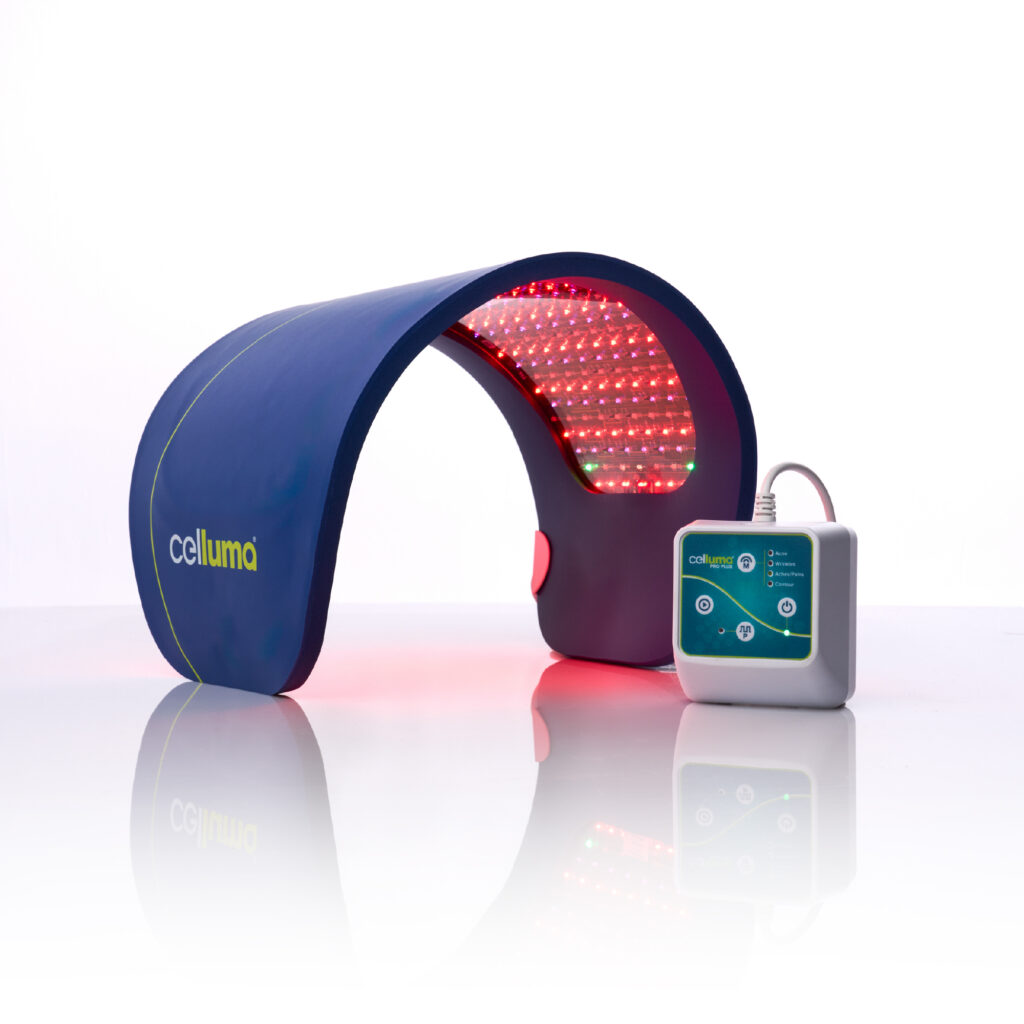
Device Spotlight – Celluma PRO PLUS from Celluma LED Light Therapy
The Celluma PRO PLUS is a versatile, FDA-cleared LED light therapy device that supports skin-brightening and resurfacing treatments by reducing inflammation, stimulating collagen production, and encouraging cellular repair. When paired with procedures like chemical peels, laser resurfacing, or enzyme treatments, the PRO PLUS can help minimize post-treatment redness, speed recovery, and improve overall skin tone. Its red and near-infrared light wavelengths penetrate deeply to target the root causes of uneven pigmentation, while promoting healthier, more radiant skin.
Treatment Spotlight – The Luminous Glow Facial with LED Light Therapy from KM Herbals
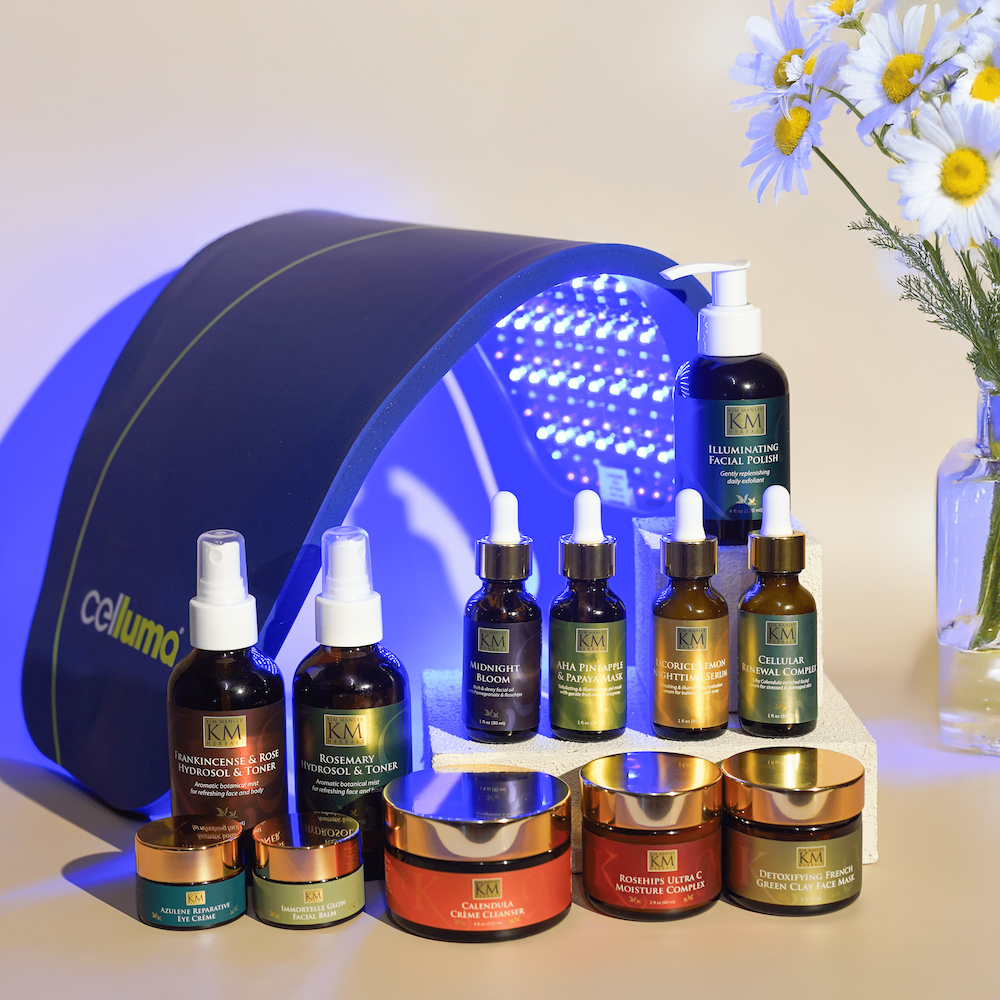
The Luminous Glow Facial from KM Herbals with Celluma LED Light Therapy is a luxurious treatment designed to rejuvenate the skin with a blend of powerful botanicals and advanced light therapy. This facial focuses on lightening, tightening, and brightening, while also delivering deep relaxation. Through a carefully curated herbal infusion, clients experience a radiant glow that enhances both skin health and overall well-being.
Each step of the treatment layers nourishment and correction for maximum results. The facial begins with an organic calendula-infused cleanser and a bamboo polish exfoliant to prep the skin. Customized masks enhance hydration and purification, while targeted serums featuring lemon, licorice, rosehips, comfrey, and green tea refine tone and texture. A signature facial massage boosts circulation, improving absorption and relaxation. The treatment concludes with a potent AHA blend of pineapple, lemon, and papaya enzymes for next-level brightness, leaving skin luminous, smooth, and revitalized.
Supporting Cast: Active Topical Ingredients
While resurfacing and brightening steal the spotlight, a supporting cast of topical products can make all the difference:
Retinoids: the slow and steady remodelers of the skin.
Niacinamide and Vitamin C to stop future pigment before it starts.
Tranexamic acid to inhibit the production of melanin.
“As melanoblasts migrate to the epidermis, the potential for future pigmentation issues can be addressed through brightening ingredients like vitamin C, licorice extract, and niacinamide. Once melanocytes are actively producing melanin, chemical peels and retinoids are highly effective at addressing hyperpigmentation by accelerating cell turnover.” – Dr. Chantal Lunderville’s 7 Tips To Treat Hyperpigmentation
Product Spotlight – GlowTone™ Corrective Serum by Face Reality® Skincare
GlowTone™ Corrective Serum by Face Reality® Skincare is a professional-grade brightening treatment designed to target post-inflammatory hyperpigmentation (PIH), sun damage, dark spots, and uneven skin tone. Powered by the proprietary Hexa-Bright™ Complex, this formula blends six clinically proven actives—azelaic acid, tranexamic acid, alpha-arbutin, niacinamide, acetyl glucosamine, and vitamin C—to safely deliver visible brightening results across all skin tones and types. The serum works without irritation or dryness, is acne-safe, and helps prevent the appearance of future discoloration, while boosting overall radiance and clarity.
Developed by Face Reality®, an award-winning, esthetician-founded acne care brand, GlowTone™ is designed to complement the brand’s holistic acne protocols. The company remains dedicated to empowering clients through its network of Certified Acne Experts, providing clear, healthy, and luminous skin solutions supported by personalized and adaptive treatments.

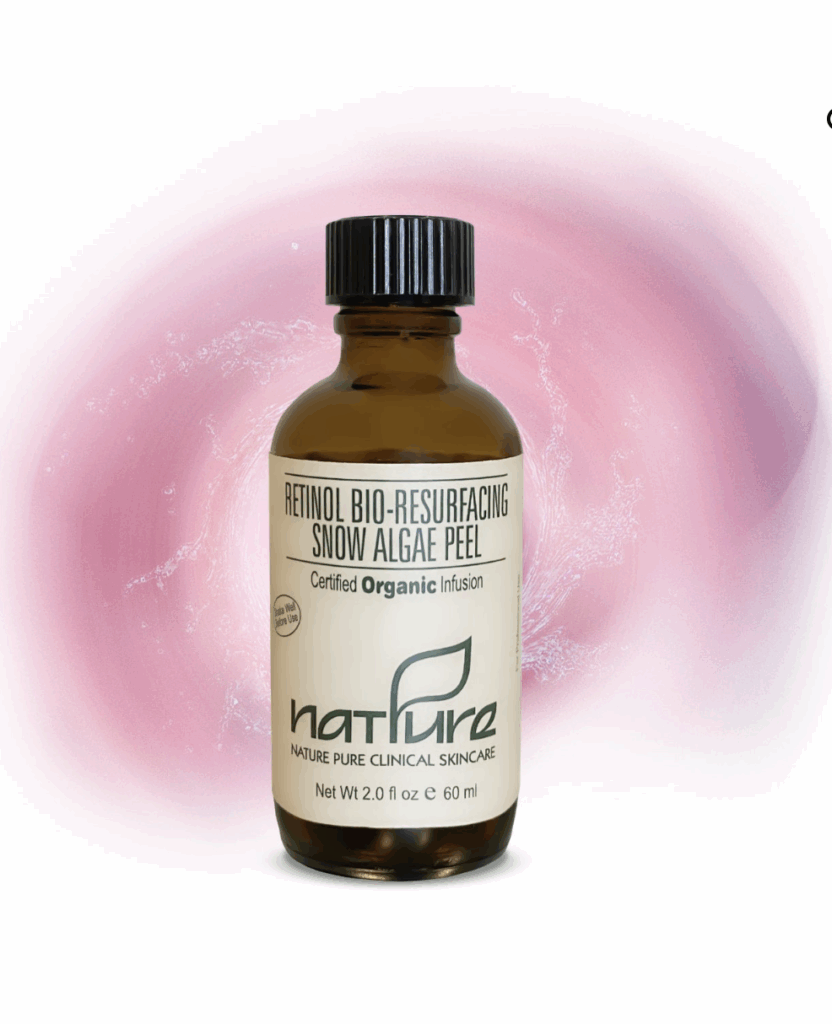
Treatment Spotlight – Retinol Bio-Resurfacing Snow Algae Peel from Nature Pure Labs
The Retinol Bio-Resurfacing Snow Algae Peel will empower your skin to thrive, glow, and defy chronological aging! Proven advanced combined bio-active ingredient technology; Retinol, Snow Algae, and stable Vitamin C, effectively work to firm skin, stimulate collagen regeneration, resurface, and enhance cellular immunity. This enables the skin to resist environmental damage and premature skin aging. The designer botanical peel restores the skin’s barrier, promotes cell longevity, and boosts cell turnover. The trifecta peeling action of Lactic, Glycolic, and 25% Multi-Fruit Acids (MFAs) successfully delivers a brighter-toned complexion and smoother, younger-looking skin.
Nature Pure suggests the Sun Damage Repair Brightening Facial Home Kit and their Pigmentation & Complexion Brightening Home System for home care.
Setting Expectations: The Real Talk
Here’s where the wit needs to meet wisdom. Patients need to know that hyperpigmentation is not a one-and-done situation. It’s more like managing that friend who always shows up uninvited: you can’t stop them from existing, but you can set boundaries.
- Hyperpigmentation can be controlled, but it isn’t always “cured.”
- Collagen induction is a process, and the glow-up takes time.
- Maintenance is non-negotiable.
When patients embrace the journey, their satisfaction skyrockets.
Treatment Spotlight – SESHA Brightening MesoBotanica Nano Pen Treatment with Tranexamic Acid
The SESHA Brightening MesoBotanica Nano Pen Treatment centers around the powerful, pigment-correcting SESHA Brighten Solution—a high-performance serum designed to visibly reduce discoloration, even skin tone, and illuminate the complexion. Powered by a potent blend of Tranexamic Acid, Hexylresorcinol, Ethyl Ascorbic Acid, Niacinamide, and Tremella Extract, this formula targets melanin production at the source with tyrosinase inhibitors and antioxidant support. What sets it apart is SESHA’s proprietary Permeation Enhancement Technology (P.E.T.®), which enables the active ingredients to penetrate beyond the skin’s surface for transformative results.
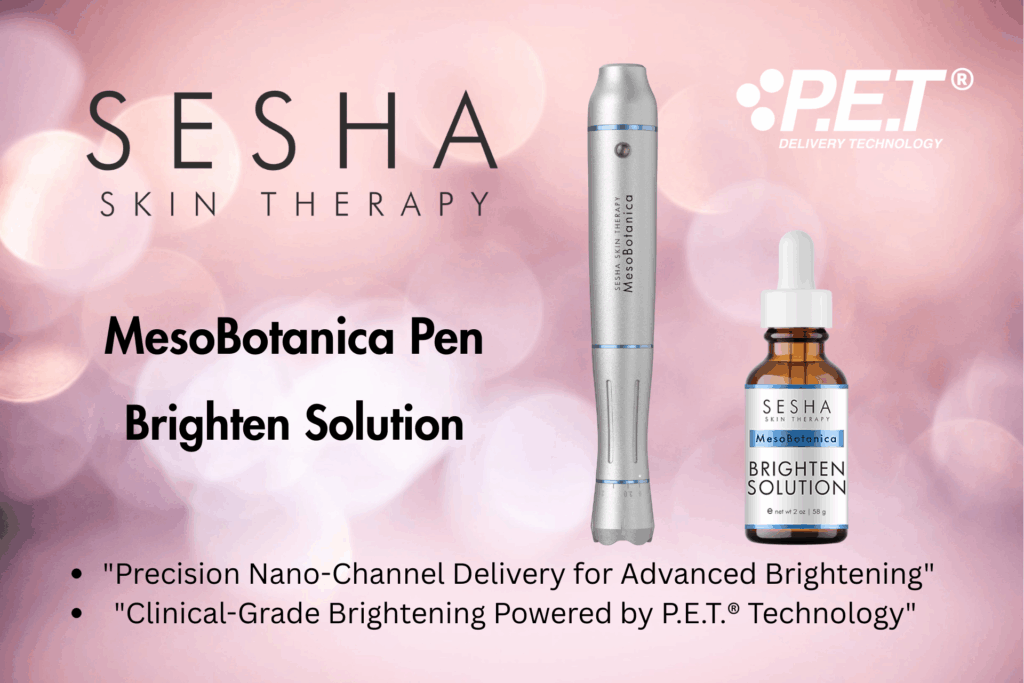
This clinical-grade solution is delivered using the MesoBotanica Nano Pen, a precision device that creates microscopic nano-channels in the skin to enhance ingredient absorption—without compromising the skin barrier. Together, the Brighten Solution and Nano Pen offer a synergistic approach to brightening, helping to dramatically fade dark spots and uneven pigmentation while maintaining skin integrity. This treatment is ideal for clients struggling with post-inflammatory hyperpigmentation, sun damage, or dull, lackluster skin—and it’s all made possible by the unmatched delivery system and science-driven formulation behind the SESHA Brighten Solution.
The Future is Bright (Literally)
As technology evolves, we’re seeing even more advanced tools enter the mix: exosomes, stem-cell derived actives, and AI-driven laser platforms are adding new possibilities. Yet one truth remains unshaken: the synergy of resurfacing and brightening delivers results that no standalone modality can match.
By combining in-office treatments with targeted home care, professionals can deliver the luminous, even-toned, smooth complexions patients crave.
Takeaway: Brightening handles tone. Resurfacing handles texture. When combined, they transform skin into something patients can’t stop showing off. The future of radiant skin is not a single modality or miracle product, but the smart, strategic pairing of resurfacing and brightening.