Why the Future of Aesthetics Lies in Treating Tissue Health Rather Than Isolated Signs of Aging
For decades, aesthetic medicine has measured success by what patients could see in the mirror.
A softened wrinkle.
A restored cheek.
A smoother forehead.
A tighter jawline.
The consultation itself often followed a familiar pattern. Patients identified the feature they disliked, clinicians selected the most appropriate treatment, and success was judged by how effectively that individual concern had been corrected.
This approach transformed aesthetic medicine and continues to benefit millions of patients worldwide.
Yet as our understanding of ageing continues to evolve, perhaps it is time to ask a different question.
What If Wrinkles Were Never the Real Problem?
Wrinkles, folds, volume loss, and skin laxity are visible manifestations of a much larger biological process. They represent the final expression of structural and functional changes that have been developing beneath the surface for years, often decades. By the time these signs become clinically apparent, multiple tissue layers have already undergone complex changes involving collagen degradation, elastin fragmentation, extracellular matrix remodelling, ligament attenuation, fat compartment redistribution, muscle dynamics, vascular alterations, and chronic low-grade inflammation.
In other words, wrinkles are not the disease.
They are the symptom.
Recognising this distinction fundamentally changes the way we should approach aesthetic medicine.
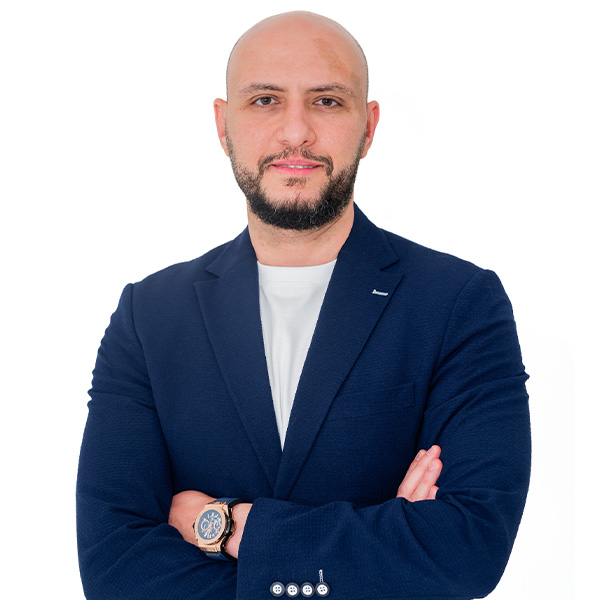
Contribution by Dr. Abdulrahman Abdulbaky, MD, MRCS
Dr. Abdulrahman Abdulbaky is a UK-based Consultant Plastic Surgeon whose work sits at the intersection of surgical precision, aesthetic artistry, and global medical innovation. With clinical experience spanning three continents, Africa, the Middle East, and the United Kingdom, his approach is shaped by a truly international perspective on beauty, anatomy, and patient care.
GMC-registered and advancing toward FRCS (Plast), Dr. Abdulbaky brings advanced international training and a meticulous, design-led eye to every treatment. He is the Founder of ÉLÉVÈ AESTHETICS, a modern aesthetic practice built on the principles of refinement, balance, and intelligent enhancement. The brand’s clean, elevated identity reflects his belief that the highest standard of aesthetic medicine should feel considered, bespoke, and quietly transformative, never overdone.
In addition to his private practice, Dr. Abdulbaky serves as Co-Director of OMNIERE Clinics, collaborating on high-end aesthetic experiences that merge medical science with luxury patient care. His clinical expertise spans plastic surgery, aesthetic medicine, and regenerative techniques, with particular focus on advanced facial fillers, nano-fat applications, and cutting-edge energy-based technologies, including FaceTite and BodyTite.
From Replacing Volume to Supporting Tissue Regeneration
Over the past decade, our specialty has gradually shifted from replacing lost volume toward supporting tissue regeneration. This transition has encouraged clinicians to think less about filling defects and more about understanding why those defects developed in the first place.
Rather than asking where volume should be added, we increasingly ask which biological processes have failed.
Rather than asking how to smooth a wrinkle, we ask why the tissue has lost its resilience.
Rather than treating age as a cosmetic concern, we are beginning to recognise it as a dynamic interaction between biology, anatomy, biomechanics, and environmental exposure.
This is perhaps the greatest conceptual change our specialty has experienced since the introduction of injectable treatments.
Aging Is No Longer Viewed As A Linear Process
Every patient follows a unique trajectory.
Genetic predisposition influences collagen quality and skin resilience. Ultraviolet exposure accelerates extracellular matrix degradation. Hormonal changes alter dermal architecture. Mechanical forces generated by facial expression, sleeping position, habitual movement, and even body posture contribute to structural remodelling over time. Lifestyle, nutrition, metabolic health, chronic inflammation, stress, and environmental pollution further shape how ageing presents clinically.
No wrinkle develops in isolation.
Each represents the cumulative effect of multiple interacting processes occurring throughout the tissues.
The Rise of Regenerative Medicine
This understanding has naturally driven the rise of regenerative medicine.
Today’s treatments increasingly aim to stimulate fibroblast activity, improve collagen architecture, optimise extracellular matrix function, enhance vascular support, and restore tissue quality rather than simply replacing volume. Energy-based technologies, collagen biostimulators, polynucleotides, regenerative injectables, and advanced medical skincare are all contributing to this broader biological approach.
Interestingly, the true innovation is not any individual treatment itself.
It is the philosophy behind their use.
Modern clinicians are becoming less interested in correcting isolated imperfections and more interested in improving the health of the tissue that produces them.
Patients Are Embracing This Philosophy As Well
Increasingly, consultations begin with requests for healthier skin, natural ageing, improved skin quality, and long-term maintenance rather than dramatic transformation. Many patients now speak about prevention, longevity, and ageing well instead of appearing younger at any cost.
This evolution reflects a wider cultural change.
Beauty is becoming less about perfection and more about vitality.
Less about transformation and more about preservation.
Less about looking different and more about looking healthy.
The Aesthetic Consultation Must Evolve
As clinicians, our role must evolve alongside these changing expectations.
The consultation should no longer focus solely on what patients dislike.
Instead, it should seek to understand how tissues have aged, why those changes have occurred, and which biological mechanisms can still be influenced. Comprehensive assessment of skin quality, structural support, facial dynamics, mechanical loading, lifestyle factors, and patient goals should precede every treatment recommendation.
Only then can truly personalised medicine begin.
The Next Challenge is Better Clinical Thinking
Perhaps the greatest challenge facing aesthetic medicine over the next decade is not the development of new products, but the development of better clinical thinking.
Technology will continue to evolve. Artificial intelligence will improve diagnostic support. Imaging systems will become increasingly sophisticated. Biomarkers may eventually allow us to measure biological skin ageing with remarkable precision. Yet none of these advances will replace the clinician’s ability to interpret the patient as a whole.
Because ageing does not occur in a single tissue.
It does not occur at a single rate.
And it cannot be reversed through a single intervention.
The Future Belongs to Clinicians Who Think Beyond Individual Procedures
Those who understand aging as a multidimensional process will be better equipped to design treatment strategies that are personalised, regenerative, and sustainable.
Redefining the Goal of Aesthetic Medicine
Ultimately, the goal of aesthetic medicine should not be to erase every wrinkle.
Nor should it be to chase unrealistic ideals of youth.
Our responsibility is to help patients maintain healthier tissues, preserve natural function, and age with confidence through thoughtful, evidence-based care.
Wrinkles will always remain part of the conversation.
But perhaps they no longer deserve to be the centre of it.