For many years, aesthetic medicine has been defined by procedures.
We became known for the treatments we offered, the technologies we invested in, and the products we selected. Conversations revolved around which filler to inject, which laser to use, or which energy-based device delivered the best results. Consultation often became the necessary step before treatment rather than the most valuable part of treatment itself.
Looking back, I believe our specialty has quietly undergone one of its most important transformations.
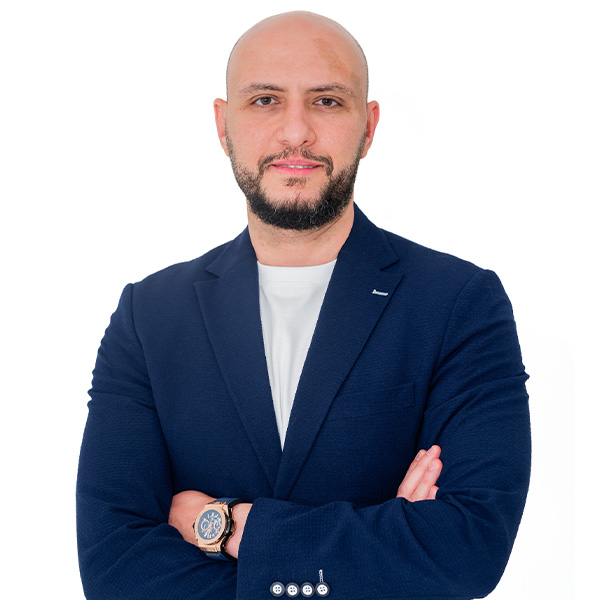
Contribution by Dr. Abdulrahman Abdulbaky, MD, MRCS
Dr. Abdulrahman Abdulbaky is a UK-based Consultant Plastic Surgeon whose work sits at the intersection of surgical precision, aesthetic artistry, and global medical innovation. With clinical experience spanning three continents, Africa, the Middle East, and the United Kingdom, his approach is shaped by a truly international perspective on beauty, anatomy, and patient care.
GMC-registered and advancing toward FRCS (Plast), Dr. Abdulbaky brings advanced international training and a meticulous, design-led eye to every treatment. He is the Founder of ÉLÉVÈ AESTHETICS, a modern aesthetic practice built on the principles of refinement, balance, and intelligent enhancement. The brand’s clean, elevated identity reflects his belief that the highest standard of aesthetic medicine should feel considered, bespoke, and quietly transformative, never overdone.
In addition to his private practice, Dr. Abdulbaky serves as Co-Director of OMNIERE Clinics, collaborating on high-end aesthetic experiences that merge medical science with luxury patient care. His clinical expertise spans plastic surgery, aesthetic medicine, and regenerative techniques, with particular focus on advanced facial fillers, nano-fat applications, and cutting-edge energy-based technologies, including FaceTite and BodyTite.
Aesthetic Assessments Are The Great Innovation In Aesthetic Medicine
The greatest innovation in aesthetic medicine today is not another injectable or another device. It is the way we perform aesthetic assessments on our patients.
Having practised, taught, and collaborated with colleagues across different healthcare systems and international educational meetings, I have noticed something remarkable. Although treatment preferences vary between countries, experienced clinicians consistently arrive at the same conclusion: successful aesthetic outcomes begin long before the first injection or energy pulse. They begin with understanding the patient.
This shift is particularly evident as regenerative medicine becomes central to modern aesthetic practice.
Regenerative treatments are fundamentally different from traditional volumising procedures. They stimulate biological processes rather than simply replacing volume or correcting isolated defects. As a result, patient assessment must also evolve. We are no longer asking, “Where is the wrinkle?” Instead, we ask, “Why has this tissue changed, and which biological and structural processes are responsible?”
Change In Approach To Treatment
That change in questioning has transformed my own clinical practice.
Early in my career, like many clinicians, I approached treatment planning by identifying the presenting complaint and selecting the most appropriate intervention. Experience gradually taught me that identical complaints often arise from entirely different anatomical and biological causes. Two patients presenting with similar lower-face laxity may require completely different treatment plans depending on skin quality, ligament support, subcutaneous architecture, facial dynamics, mechanical loading, or lifestyle factors.
Treating the symptom without understanding the underlying mechanism often leads to inconsistent outcomes.
This realization became even clearer while teaching internationally. Despite differences in available technologies and regulatory environments, one principle remained remarkably consistent among experienced practitioners: the quality of assessment directly influences the quality of treatment.
Changes in Patients
Today’s patients are also changing.
They are better informed, more aware of natural-looking outcomes, and increasingly interested in prevention, longevity, and tissue health rather than dramatic transformation. They often seek comprehensive plans rather than isolated procedures. This evolution requires clinicians to think beyond individual treatments and adopt a more structured method of analysing ageing.
Perhaps the most significant lesson I have learned is that ageing should no longer be viewed as a single process.
It is a multidimensional interaction between skin biology, structural support, volume redistribution, muscular function, biomechanics, environmental exposure, and intrinsic ageing. These processes occur simultaneously, yet not uniformly, across every patient. No single technology or injectable can adequately address all these dimensions in isolation.
This is why I believe the future of aesthetic medicine lies in comprehensive assessment rather than procedural selection.
A modern consultation should extend beyond identifying lines, folds, or volume loss. It should evaluate tissue quality, collagen integrity, skin behaviour, facial movement, mechanical stress, anatomical support, patient expectations, and long-term ageing trajectories. Increasingly, the same philosophy applies to body rejuvenation, where tissue quality, biomechanics, skin laxity, adipose distribution, and functional movement patterns influence treatment outcomes just as much as the procedure itself.
Rather than asking which product to use first, perhaps we should first ask which tissue layer requires intervention, which aging mechanism predominates, and which regenerative pathway offers the greatest opportunity for improvement.
A Structured Aesthetic Assessment Framework
This philosophy ultimately led me to develop a structured aesthetic assessment framework for both facial and body rejuvenation. The intention was never to create another treatment algorithm, but rather to encourage a systematic method of observing patients before making therapeutic decisions. By integrating anatomical analysis, tissue quality, dynamic movement, biological ageing, and mechanical influences, assessment becomes reproducible, objective, and adaptable across different treatment modalities.
Importantly, such frameworks are not intended to replace clinical judgement. Instead, they provide clinicians with a common language that supports personalised treatment planning while maintaining flexibility for individual patient needs.
Looking ahead, I believe assessment will continue to evolve alongside technological innovation.
Artificial intelligence, digital facial analysis, three-dimensional imaging, objective skin quality measurements, and predictive modelling are likely to become valuable adjuncts to clinical evaluation. Yet even as technology advances, the clinician’s ability to interpret these findings within the context of human anatomy, ageing biology, and patient expectations will remain irreplaceable.
The consultation of the future may therefore become the most sophisticated procedure we perform.
Not because it is longer or more complex, but because it determines everything that follows.
The future of aesthetic medicine will not be defined solely by better devices, more advanced injectables, or novel regenerative products. It will be defined by our ability to understand the patient in front of us with greater depth, greater structure, and greater purpose.
Only then can treatment become truly personalised.
And perhaps that is the most important innovation our specialty has to offer.