How regenerative medicine is redefining the future of skin rejuvenation
The Evolution of Skin Resurfacing
For decades, skin resurfacing was synonymous with controlled injury.
Whether through chemical peels, dermabrasion, ablative lasers, or fractional technologies, the underlying principle remained remarkably similar: create a controlled wound, stimulate the body’s natural healing response, and allow new collagen formation to improve skin quality. These techniques transformed aesthetic medicine and continue to hold an important place in clinical practice.
Yet over the past few years, something far more significant has happened.
The philosophy behind skin rejuvenation has begun to change how we focus on the treatment of skin aging.
Today, our goal is no longer simply to remove damaged tissue or replace what has been lost. Increasingly, we are seeking to restore the biological function of aging skin itself.
This subtle shift from resurfacing to regeneration may become one of the defining moments in modern aesthetic medicine.
A Global Shift in Clinical Thinking on Skin Aging
Throughout my clinical practice and while teaching internationally, I have noticed that although countries often differ in their preferred devices or injectable products to treat skin aging, they are gradually moving toward the same objective. Clinicians are asking fewer questions about which technology creates the strongest injury and more questions about how we can support healthier tissue regeneration while reducing inflammation, downtime, and unnecessary trauma.
The conversation has changed.
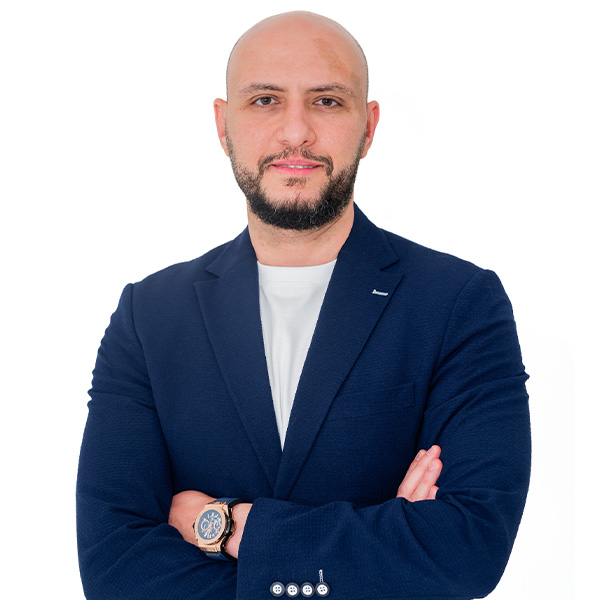
Contribution by Dr. Abdulrahman Abdulbaky, MD, MRCS
Dr. Abdulrahman Abdulbaky is a UK-based Consultant Plastic Surgeon whose work sits at the intersection of surgical precision, aesthetic artistry, and global medical innovation. With clinical experience spanning three continents, Africa, the Middle East, and the United Kingdom, his approach is shaped by a truly international perspective on beauty, anatomy, and patient care.
GMC-registered and advancing toward FRCS (Plast), Dr. Abdulbaky brings advanced international training and a meticulous, design-led eye to every treatment. He is the Founder of ÉLÉVÈ AESTHETICS, a modern aesthetic practice built on the principles of refinement, balance, and intelligent enhancement. The brand’s clean, elevated identity reflects his belief that the highest standard of aesthetic medicine should feel considered, bespoke, and quietly transformative, never overdone.
In addition to his private practice, Dr. Abdulbaky serves as Co-Director of OMNIERE Clinics, collaborating on high-end aesthetic experiences that merge medical science with luxury patient care. His clinical expertise spans plastic surgery, aesthetic medicine, and regenerative techniques, with particular focus on advanced facial fillers, nano-fat applications, and cutting-edge energy-based technologies, including FaceTite and BodyTite.
Today’s Aesthetic Patient Has Changed
Patients have changed as well.
Today’s aesthetic patient is often less interested in looking dramatically different and more interested in looking healthier, fresher, and well-maintained. They want improvements in skin quality, texture, elasticity, pigmentation, hydration, and firmness while preserving natural facial character. Increasingly, they are seeking long-term tissue health rather than short-term cosmetic correction.
This evolution has challenged us to rethink what resurfacing truly means.
Rethinking the Biology of Skin Aging
Historically, resurfacing focused primarily on the epidermis and superficial dermis. While these layers remain important, our understanding of skin aging has expanded considerably. We now recognize that successful rejuvenation depends on a far more complex interaction involving fibroblast activity, extracellular matrix remodeling, vascular health, inflammatory pathways, mechanical stress, collagen architecture, and cellular communication.
As our understanding of skin aging biological processes has improved, so too have our treatment strategies.
Energy-Based Technologies as Regenerative Tools
Energy-based technologies continue to evolve, becoming increasingly precise in their ability to stimulate collagen while minimizing collateral tissue injury. Radiofrequency, microneedling, fractional laser systems, hybrid platforms, and ultrasound-based technologies are no longer viewed simply as resurfacing tools. Instead, they have become methods of initiating regenerative cascades within the skin to treat issues related to skin aging.
The Rise of Regenerative Injectables
At the same time, regenerative injectables have expanded our therapeutic options.
Rather than focusing solely on replacing volume, clinicians now routinely incorporate collagen biostimulators, polynucleotides, skin boosters, regenerative fillers, and other tissue-supporting therapies into comprehensive treatment plans. These treatments aim not merely to improve appearance but to influence the biological behavior of aging tissues over time.
The Future Belongs to Combination Therapy
Perhaps the most exciting development is not any individual technology, but the growing appreciation that no single modality is sufficient on its own.
The future belongs to combination therapy.
Energy-based devices improve collagen remodeling and tissue contraction. Regenerative injectables support fibroblast activity and extracellular matrix restoration. Medical skincare optimizes barrier function and pigmentation control. Lifestyle interventions influence inflammation, nutrition, ultraviolet exposure, sleep quality, and metabolic health. Each component addresses a different aspect of tissue aging, creating a synergistic effect that is difficult to achieve with any single intervention.
From Treating Wrinkles to Treating Biology
This layered approach reflects a broader evolution within aesthetic medicine.
Rather than asking, “Which treatment should I perform?” we increasingly ask, “Which biological process requires support?”
That distinction changes everything.
It shifts our attention away from products and toward pathology.
Away from isolated wrinkles and toward tissue behavior.
Away from cosmetic correction and toward regenerative medicine.
A Common Language Across International Markets
Interestingly, this trend is emerging across multiple international markets despite differences in regulation, product availability, and clinical practice. Some regions have embraced regenerative injectables earlier, while others continue to lead innovation in energy-based technologies. However, the underlying philosophy is becoming remarkably consistent: improve tissue quality first, then refine structural correction where necessary.
This convergence suggests that regenerative thinking is no longer a niche concept. It is becoming the common language of modern aesthetic medicine.
Personalized Treatment Planning
Another important consequence of this evolution is the growing emphasis on personalized treatment planning.
Not every patient ages in the same way.
Chronological age tells us very little about biological tissue quality. Genetics, environmental exposure, lifestyle, hormonal influences, metabolic health, and mechanical forces all contribute to individual aging patterns. As a result, identical treatments applied to different patients rarely produce identical outcomes.
Regeneration Begins With Diagnosis
This is where structured clinical assessment becomes indispensable.
Regenerative medicine is not simply about selecting newer products. It requires understanding which tissue compartments are affected, identifying the predominant mechanisms of aging, and selecting treatments that complement rather than compete with one another.
The success of regeneration therefore begins with diagnosis rather than intervention.
Technology and the Future of Regenerative Care
Looking ahead, the future of resurfacing will almost certainly extend beyond devices and injectables alone. Artificial intelligence, advanced skin imaging, objective biomarkers of biological aging, digital treatment planning, and predictive analytics are likely to become increasingly integrated into everyday clinical practice. These technologies will not replace clinical judgment but will strengthen our ability to personalize regenerative care with greater precision.
From an Era of Procedures to an Era of Biology
Ultimately, I believe we are witnessing a transition that is larger than the introduction of any single device or product.
We are moving from an era defined by procedures to one defined by biology.
Skin rejuvenation is no longer simply about creating controlled injury.
It is about understanding tissue, supporting regeneration, respecting natural aging, and helping patients maintain healthier skin over time.
Resurfacing will always remain an important part of aesthetic medicine.
But its future will be measured not by how effectively we remove damaged tissue, but by how intelligently we regenerate it.