A Clinical Esthetician’s Approach
Hair loss is a multifactorial concern that requires a layered, strategic approach. For clinical estheticians, the scalp should be treated as living skin first, then supported through exfoliation, circulation, ingredient delivery, and follicular stimulation. When used thoughtfully, hydrodermabrasion, oxygen infusion, LED therapy, meridian-based scalp massage, and microneedling can work together to create a healthier environment for hair growth.

Scalp Analysis Comes First
Every effective protocol begins with a thorough scalp assessment. Dry flaking, excess oil, congestion, and buildup can all interfere with follicular function, but they do not always mean the same thing. A scalp may appear oily because it is actually dehydrated and overproducing sebum, or it may present with a true greasy overabundance that coats the follicle and contributes to congestion.
This distinction matters because both conditions can block the follicle, but they require different support. A dehydrated oily scalp may still show tightness, flaking, or barrier disruption, while a greasy scalp often looks visibly shiny, feels slick, and attracts more debris. Hydrodermabrasion is an excellent first step because it helps remove dead skin, excess oil, and surface buildup that may be interfering with follicular health.
This is not the same as a shampoo service. It is a deeper exfoliating and cleansing treatment that prepares the scalp for active ingredients. That is why clients should arrive with clean hair. When the scalp is already shampooed, the treatment can focus on the root issue instead of working through product residue or buildup. It also allows supportive ingredients to remain on the scalp after the service rather than being immediately washed away.
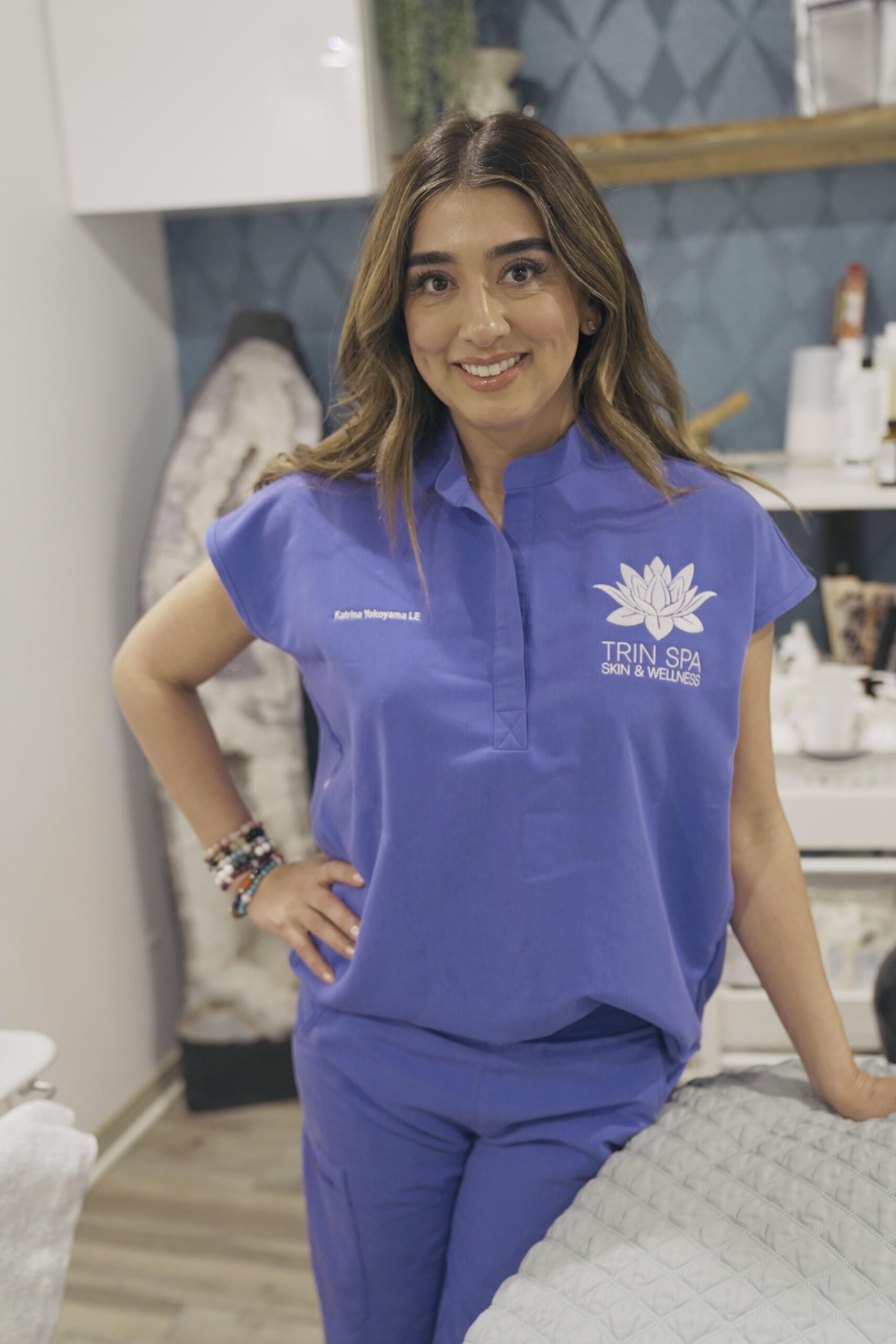
Contribution by Katrina Yokoyama
Licensed Esthetician, Founder of Deva Moon Academy & Trin Spa Skin & Wellness.
Katrina is an Energy Healer & Educator.
Katrina Yokoyama has been a licensed esthetician since 2005, gaining extensive experience throughout
the Fresno area and beyond. Over the years, she has expanded her knowledge by studying advanced skincare and holistic therapies from California to New York City, as well as Alaska, Hawaii, and Japan. In 2013, she founded Trin Spa Skin & Wellness, a solo luxury skin boutique dedicated to skin health, energetic balance, and overall well-being.
Her expertise and dedication earned her two award-winning recognitions at The Skin Games (TSG), and in 2017, she was invited to become an educator for California Skincare Supply (CSS). By 2020, she advanced to the role of lead judge for TSG, further solidifying her influence in the industry. In 2024, she was once again invited to judge, and in 2025, she was hand-selected as one of the featured speakers for the inaugural Awaken Esthetics Retreat. There, she shared her groundbreaking perspective on the role of energy in the esthetician treatment room, teaching how subtle energy practices can elevate client results and deepen professional presence. This milestone also marked the launch of Deva Moon Academy, her newest educational platform designed to empower practitioners with advanced training in crystals, sound, chakra healing, and energetic integration.
Oxygen Infusion and Targeted Actives
Immediately after hydrodermabrasion, oxygen infusion can be used with anagen-supportive stem cell formulas to help drive ingredients into the freshly prepared scalp. This step is valuable because exfoliation creates better access for topicals, allowing active ingredients to penetrate more effectively.
Anagen stem cell technology is used in hair restoration because the anagen phase is the active growth phase of the hair cycle. These formulations are designed to support that growth environment by encouraging follicular activity and improving the overall condition of the scalp. In professional scalp care, they are often used as part of a strategy to help create healthier, more responsive follicles.
Ingredient selection matters. A strong protocol does not rely on one “miracle” ingredient. It uses a combination of actives that work together to nourish the scalp and support the hair growth cycle.
LED Therapy for Scalp Support
Red LED therapy is another important addition to a scalp restoration protocol. This modality is commonly used to support circulation, cellular activity, and overall scalp wellness. It pairs well after oxygen infusion because the scalp has already been exfoliated and treated with active ingredients.
From a clinical perspective, LED therapy is valued for its ability to support a healthier growth environment without adding irritation. For clients dealing with thinning hair, shedding, or a sluggish scalp, it can serve as a supportive step in a broader treatment plan.
Never Miss An Article – Get on the VIP Email List
Meridian-Based Scalp Massage
Meridian-based scalp massage techniques such as gua sha, combing therapy, and acupressure-inspired massage can be an effective supportive modality for hair growth. These methods are often used to stimulate circulation, relax scalp tension, and encourage a healthier environment for follicular activity. They can also help distribute oils and serums more evenly across the scalp, which makes them especially useful when paired with treatment products.
This type of scalp work is not just about relaxation. It can also be viewed as part of the treatment assessment. By working the scalp manually, the practitioner can observe where tension, dryness, flaking, oiliness, or congestion is most pronounced. That information helps guide the next steps in care and can help determine whether a client is a good candidate for microneedling.
Microneedling for Hair Restoration
Microneedling is another powerful tool in a hair restoration protocol, but it must be approached with care. Scalp microneedling is very different from facial microneedling. The scalp generally requires a lighter, more conservative approach, and the practitioner must be mindful of the many blood vessels and follicular structures in the area.
The goal is stimulation, not trauma. Going too deep can be counterproductive and may potentially compromise the follicle. Proper device selection, needle count, and technique are essential, and only properly trained providers should perform this service.
The stem cells, ideally anagen-focused stem cells, along with peptides and other growth-supportive serums used during and post microneedling, should be specifically formulated for scalp and hair restoration. A product designed for the face is not automatically suitable for the scalp, and not every serum is appropriate for needling. The most effective protocols use formulations created for controlled penetration, scalp tolerance, and targeted support of the hair growth environment.
Why Ingredients Matter
The strength of a hair restoration protocol depends not only on the modalities used but also on the ingredients selected. Copper peptide GHK is often valued for its reparative and strengthening properties. In scalp care, it may help support tissue repair, improve the overall quality of the scalp environment, and strengthen the hair shaft over time. Because peptides are signaling ingredients, they are often used to help support communication within the skin and scalp, making them a strategic choice in advanced hair protocols.
Collagen-supportive scalp oils and botanical extracts also play an important role in a hair restoration protocol. Ingredients such as jojoba oil, rosehip oil, chia seed oil, he shou wu, gynostemma, horsetail, calendula, mangosteen, comfrey, rose, vitamin E, rose otto, and sandalwood can help nourish the scalp, support hydration, soothe dryness, and promote a balanced environment for healthy-looking hair. He Shou Wu, horsetail, and gynostemma are especially interesting in scalp care because they are often associated with traditional support for vitality, resilience, and balance, while jojoba and rosehip help keep the scalp conditioned without feeling overly heavy. Together, these ingredients may support collagen indirectly by helping maintain hydration, antioxidant protection, fibroblast activity, and the extracellular matrix around the follicle, creating a healthier foundation for hair growth.
The goal is not simply to coat the scalp, but to create an environment where the follicle can function more efficiently.
Home Care Extends Results
Professional scalp services should always be supported with home care. Clients may benefit from shampoos, scalp spritzes, serums, oils, and supplements that reinforce the treatment plan between visits. The purpose is to maintain scalp balance, support circulation, and keep the follicle environment active and nourished.
Home care is especially important after treatments that remove buildup or increase product penetration. Without it, the client may lose momentum between services. A simple but consistent regimen can help extend the benefits of in-clinic treatment and improve long-term results.
A Comprehensive Approach
Hair restoration is most effective when it is approached as a complete system rather than a single service. Hydrodermabrasion prepares the scalp. Oxygen infusion delivers supportive actives. LED therapy encourages cellular support. Meridian-based massage improves circulation and tension release. Microneedling can further stimulate the scalp when appropriate. Together, these modalities create a thoughtful, clinical protocol for supporting hair and scalp health.
For estheticians working in the beauty and wellness space, this is where advanced scalp care becomes truly impactful: in the ability to assess, customize, and combine modalities with the right ingredients to support both the scalp and the client’s long-term hair health.