Regenerative aesthetics has officially moved beyond buzzword territory. We are no longer simply asking what a treatment can remove, resurface, tighten, or correct. The more interesting question is becoming: How well can we support the skin’s own ability to repair, rebuild, and function?
That shift is changing everything from treatment planning to ingredient technology, and we’re so grateful to M.A.D Skincare for sponsoring this article so we can share this information.
For L+A’s August exploration of The Science of Skincare, M.A.D Skincare offers an interesting case study because its approach to regenerative skincare is not centered around one hero serum, one procedure, or one shiny piece of equipment. Instead, M.A.D is looking at the entire regenerative process.
Prepare the skin. Create the appropriate controlled stimulus. Deliver targeted bioactives. Support recovery. Protect the investment.
Because apparently skin regeneration also appreciates a well-organized itinerary.
Regenerative Skincare Is Bigger Than the Procedure
Maximum Results Require More Than Controlled Trauma
Microneedling, microchanneling, resurfacing technologies, and other controlled-trauma procedures have become essential tools in modern aesthetics because of their ability to initiate the skin’s natural repair response.
But creating the stimulus is only one piece of the puzzle.
For regenerative skincare to reach its potential, the condition of the skin before treatment, what is introduced during treatment, and how the skin is supported all matter afterward.
M.A.D Skincare approaches this through a regenerative optimization strategy designed around cellular health, skin conditioning, targeted bioactive delivery, recovery, and photoprotection.
In other words, the procedure may start the conversation, but the skin needs the right resources to keep talking.
M.A.D’s Four-Core Philosophy Starts at the Cellular Level
At the foundation is M.A.D Skincare’s Four-Core Philosophy: exfoliation, cellular respiration, cellular detoxification, and collagen and elastin synthesis.
Four Functions, One Bigger Goal
Exfoliation helps create an optimal environment for treatment penetration while supporting the renewal process.
Cellular respiration focuses on ATP production. Skin cells require energy to perform their normal functions, respond to regenerative ingredients, and participate in tissue repair.
Cellular detoxification addresses cellular waste and oxidative burden, helping establish conditions that better support healthy cellular function.
Finally, collagen and elastin synthesis supports the structural side of regeneration, including extracellular matrix remodeling, tissue integrity, and long-term resilience.
This is where the science gets particularly interesting. Regeneration is not simply about forcing skin into action. It is about creating an environment in which skin has the energy, signaling, and support to do its job effectively.
Preparing Skin for Regenerative Treatments
Environmental Stress Does Not Clock Out Before Your Appointment
Before asking skin to embark on an ambitious repair project, it makes sense to consider what it has been dealing with all day.
UV exposure, pollution, oxidative stress, and other environmental factors can influence cellular function and collagen integrity. M.A.D Skincare’s Environmental Concern was developed around antioxidants, cellular detoxifiers, isoflavones, and oxygen-supporting technologies designed to condition the skin.
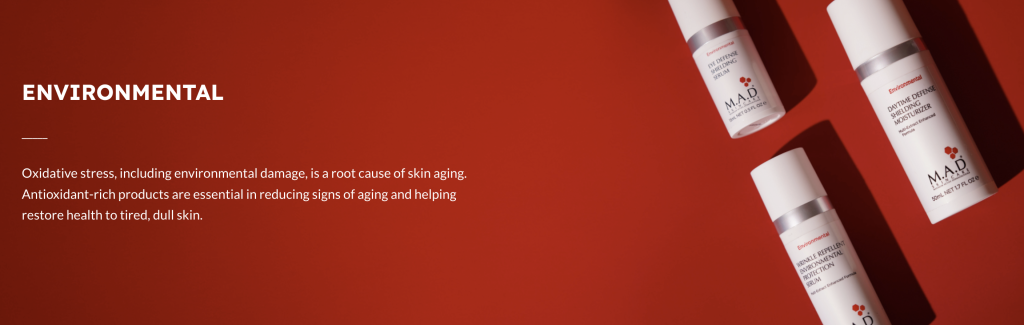
Wrinkle Repellent Environmental Protection Serum is formulated to reduce oxidative stress while supporting oxygenation and cellular function.
The Environmental Detox Mask with Environmental Shielding Booster Serum helps defend against environmental stress while supporting collagen integrity.
Daytime Defense Shielding Moisturizer extends that conditioning approach into daily care, helping defend the skin while supporting healthy cellular function.
This makes preparation an active part of regenerative skincare, rather than something that begins once the device touches the face.
Bio-Regenerative Infusion Enters the Treatment Room
Why Targeted Delivery Is Becoming Such a Major Conversation
Once controlled-trauma treatments create microchannels within the skin, an important opportunity emerges: targeted bioactive delivery.
Bio-Regenerative Infusion aesthetic treatments combine procedures such as microneedling and microchanneling with advanced transdermal delivery strategies designed to introduce regenerative bioactives where they can support the skin’s response.
This is one reason mesotherapy-inspired concepts have become increasingly relevant within modern aesthetics. The conversation is evolving beyond simply creating controlled injury. Practitioners are becoming increasingly interested in what signals and supportive ingredients can be paired with that process.
That brings us to growth factors.
M.A.D SYNPLA Growth Factors Meet Controlled Trauma
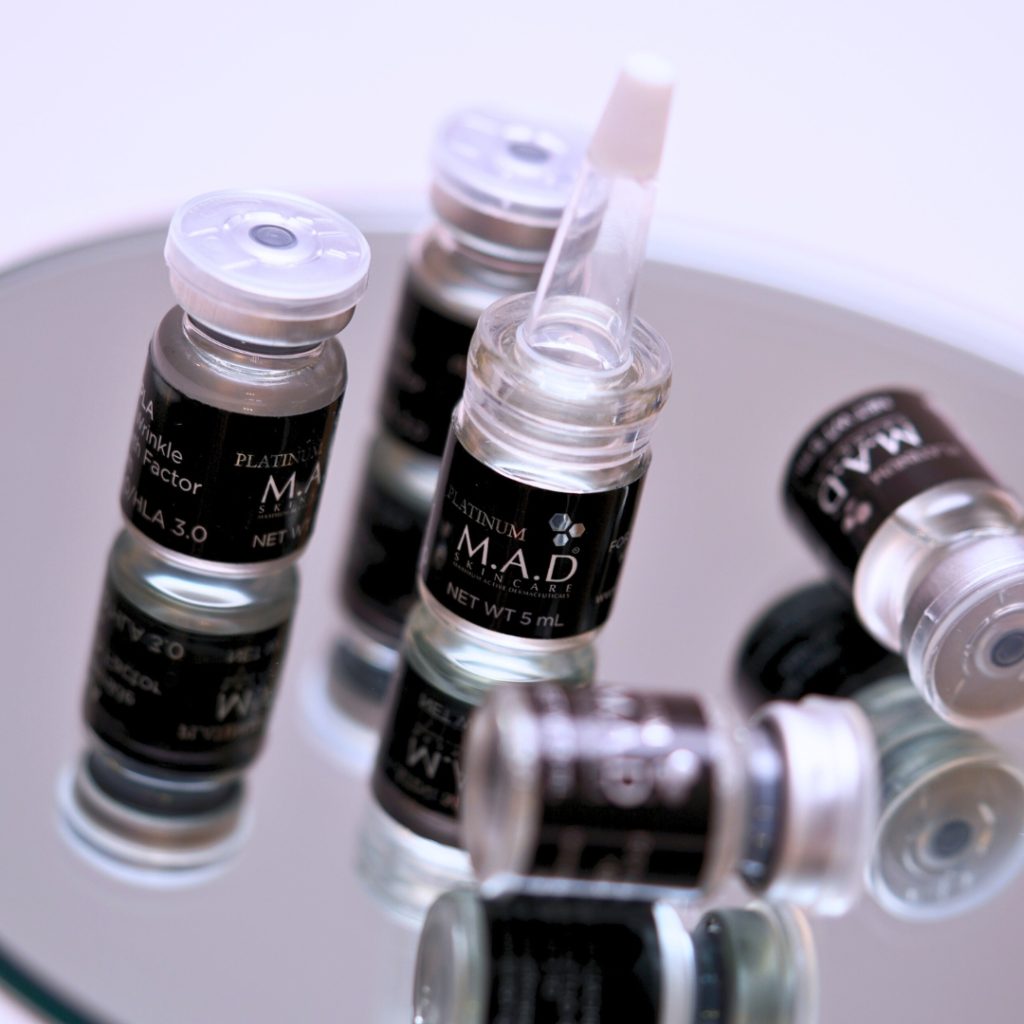
M.A.D Platinum SYNPLA Growth Factors are designed specifically for this emerging category.
Modeled after human placental growth factors, SYNPLA formulas are 100 percent synthetic and do not use human tissue. Each small-molecular-weight formula combines five biomimetic growth factors, four forms of hyaluronic acid, and targeted active ingredients designed to support cellular signaling, tissue repair, hydration, and regeneration.
As natural growth factor signaling declines with age, targeted delivery is intended to support cellular communication involved in collagen synthesis, dermal remodeling, and tissue repair.
This is where regenerative skincare begins looking less like a single treatment category and more like a biological strategy.
Three SYNPLA Serums, Three Targeted Applications
SYNPLA Anti-Wrinkle Growth Factor Serum GF 3.0/HLA 3.0 targets visible rejuvenation, supporting cellular communication, hydration, elasticity, and skin repair.
SYNPLA Bright Growth Factor Serum GF 3.0/HLA 3.0 combines regenerative support with a focus on uneven tone and discoloration.
Then the conversation travels north.
SYNPLA Anagen Growth Factor Serum GF 3.0/HLA 3.0 takes the technology into scalp and hair protocols, targeting the hair growth cycle and supporting follicular density.
Same regenerative philosophy. Very different treatment conversations.
Recovery Is Part of the Regenerative Treatment
Controlled Trauma Needs Controlled Aftercare
A procedure does not end when the patient gets off the treatment table.
Controlled trauma temporarily compromises barrier function and can increase transepidermal water loss, dehydration, sensitivity, and inflammatory activity. Supporting recovery is therefore not simply about making patients more comfortable. It is part of protecting the regenerative process that the treatment was designed to initiate.
M.A.D Vitamin K Recovery Cream is formulated for compromised and post-procedure skin, supporting vascular integrity, microcirculation, barrier restoration, and tissue repair.
Think of it as refusing to spend an entire treatment stimulating repair only to send the skin home without a plan.
And Yes, We Need to Talk About SPF Again
We know. Skincare professionals discussing sunscreen is hardly breaking news.
But within regenerative skincare, photoprotection takes on even greater importance.
UV exposure can increase oxidative stress and inflammatory activity while activating matrix metalloproteinases, or MMPs, which contribute to collagen degradation. Following procedures, compromised skin may also be more vulnerable to UV-related injury and post-inflammatory hyperpigmentation.
M.A.D Skincare’s Sun Protection Concern provides broad-spectrum daily photoprotection designed to help protect healing tissue and preserve treatment outcomes.
Basically, if we are investing this much science into rebuilding collagen, perhaps we should stop inviting UV radiation over to dismantle it.
Regenerative Skincare Goes Global
SYNPLA Is Part of a Much Larger Aesthetic Movement
Perhaps one of the most compelling parts of the M.A.D SYNPLA story is that this is not occurring in an American aesthetics bubble.
Physicians and aesthetic professionals across Europe and the Middle East are incorporating SYNPLA Growth Factors into regenerative treatment protocols, reflecting the broader international adoption of growth factor technology and bio-regenerative approaches.
That global perspective matters.
Aesthetic medicine is increasingly focused on skin quality, cellular communication, tissue health, collagen remodeling, and longevity. The treatment goal is shifting from simply correcting what we see toward influencing how skin behaves.
And that is a much bigger conversation.
The Future of Regeneration Is a Complete Roadmap
Before. During. After. Protect. Repeat.
The next generation of regenerative aesthetics may not be defined by one breakthrough treatment or ingredient.
It may be defined by how intelligently we connect them.
M.A.D Skincare’s strategy creates a roadmap that begins with cellular optimization and environmental defense, moves into controlled-trauma procedures and targeted SYNPLA bioactive delivery, then continues through recovery, home care, and photoprotection.
That is ultimately what makes this approach worth watching.
Regenerative skincare is becoming less about performing a procedure and hoping biology takes it from there. It is about understanding what skin requires throughout the entire regenerative process and strategically supporting those needs.
The procedure creates the opportunity.
The science helps determine what happens next.
And if we are going to ask skin to regenerate, rebuild, remodel, defend itself, maintain hydration, manufacture collagen, and look fantastic while doing it, the least we can do is give it a little backup.