Let’s address the elephant in the treatment room.
When you hear the name Dermaesthetics Beverly Hills (DBH), what flashes through your mind?
Another celebrity doctor.
Another luxury skincare line.
Another “inspired by Beverly Hills” brand with glossy packaging, a photoshoot featuring a white marble countertop, and a founder who somehow discovered skincare between filming reality television.
Thanks to DBH for sponsoring this article on Chemical Peels.
Cue the collective eye roll.
Except… that’s not the story.
Not even close.
Here’s the plot twist. Dermaesthetics Beverly Hills has quietly been developing professional Korean clinical skincare since 1988. Long before Korean skincare became everyone’s favorite social media buzzword. Long before ten-step routines became mainstream. Long before every ingredient suddenly needed its own fan club.
Behind DBH is Lincoln Lee, a formulator whose fascination with Korean skincare science borders on an obsession. Fortunately for skincare professionals everywhere, that’s exactly the kind of obsession that moves an industry forward.
And after learning about DBH’s newest approach to chemical peeling, we have a confession.
Chemical peels just became sexy again.

Wait… Aren’t Chemical Peels Like Totally 90’s?
If we’re being honest, chemical peels have developed a bit of an image problem.
Not because they don’t work.
Because they work so consistently that we sometimes forget how powerful they actually are. They were truly put in the forefront in the 1990’s and became a part of the landscape – so much so that they’ve just sort of blended in.
Meanwhile, every week introduces another ingredient that promises to revolutionize skincare.
Peptides.
Growth factors.
Stem cells.
Exosomes.
PDRN.
The latest biotech innovation that everyone suddenly can’t stop talking about.
The spotlight keeps shifting, while chemical peels quietly continue delivering some of the most reliable clinical outcomes available.
It’s a little like ignoring your favorite restaurant because a flashy new place opened down the street.
The classics are classics for a reason.
But what if the classic received a serious upgrade?
That’s exactly where DBH enters the conversation.
One Client. Five Skin Concerns. Now What?
Every experienced provider knows consultations rarely sound like this.
“My only concern is dehydration.”
Instead, they sound more like this.
“I break out around my chin… but my skin also feels dry… and these brown spots showed up after summer… and I’m noticing fine lines… and can we do something about these acne scars?”
Perfect.
Simple.
Absolutely not.
Modern clients rarely present with one isolated concern. Skin is layered, complex, and constantly changing.
Pigmentation often arrives with dehydration.
Acne loves bringing inflammation to the party.
Fine lines show up alongside uneven tone.
Sensitivity likes to complicate everything.
Choosing the right peel isn’t simply about selecting an acid.
It’s about understanding the skin sitting in front of you.
The Dermaesthetics Beverly Hills Peel Palette Thinks Differently
This is where DBH decided to rethink the conversation.
Instead of asking providers to memorize a complicated collection of acids, percentages, protocols, and treatment charts, they created something refreshingly intuitive.
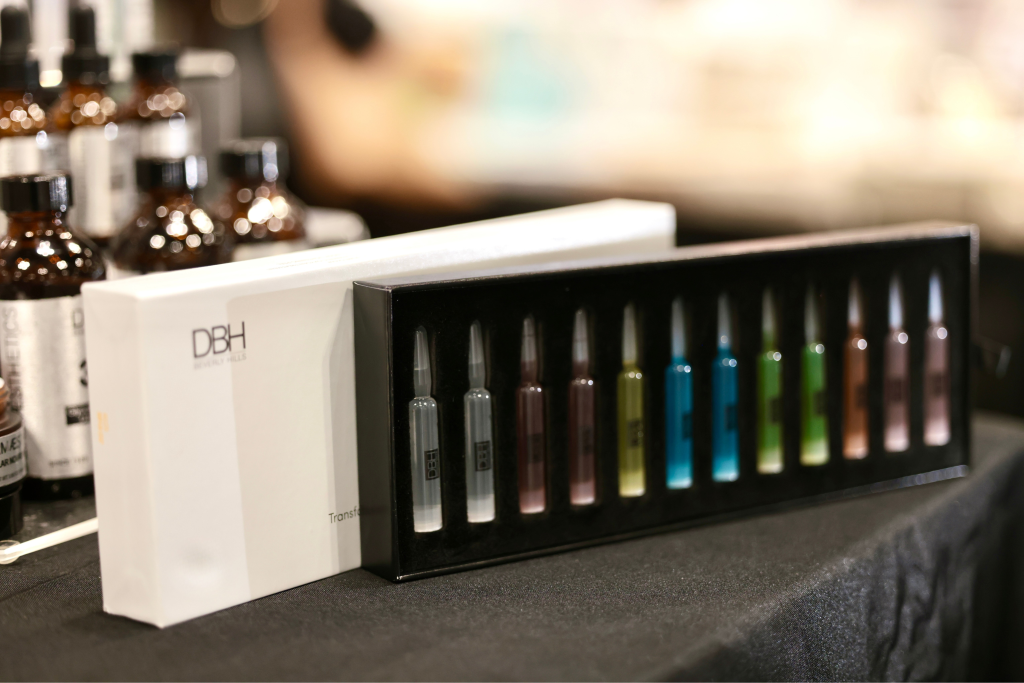
The Dermaesthetics Beverly Hills Peel Palette.
At first glance, it looks beautifully organized thanks to its color-coded system.
But don’t mistake good design for a marketing gimmick.
The colors actually represent treatment objectives.
Each formulation is designed around a specific clinical goal.
Acne.
Hyperpigmentation.
Hydration.
Brightening.
Firming.
Fine lines.
Acne scarring.
Instead of wondering which bottle makes the most sense, providers can quickly connect the client’s primary concern with the treatment objective.
It transforms peel selection into a more logical clinical decision.
Sometimes the smartest innovation isn’t making something more complicated.
It’s making something easier to understand.
Color Coding Isn’t Just Pretty
Let’s give credit where it’s due.
Humans remember visuals.
Medical education has known this forever.
Color creates faster recognition.
Faster recognition creates confidence.
Confidence creates consistency.
The Peel Palette becomes more than a collection of bottles sitting on a shelf.
It becomes a common language.
During education.
During consultations.
During staff training.
During treatment planning.
Imagine onboarding a new provider.
Instead of saying, “Use Peel Number Four unless they’re Fitzpatrick IV with post-inflammatory pigmentation after recent retinoid use…”
You begin connecting colors with treatment goals.
Suddenly everyone is speaking the same language.
That’s not simplifying science.
That’s simplifying communication.
Those are two very different things.
No Mixing. No Guessing. No “I Think That Was Enough.”
We’ve all seen treatment rooms where products slowly become chemistry experiments.
A little here.
A little there.
One more drop.
Maybe two.
DBH took another route.
Every Peel Palette treatment arrives in an individualized single-use vial.
That simple decision solves several treatment room headaches all at once.
Better consistency
Every client receives the intended amount.
Less waste
No leftover product sitting around wondering about its future.
Better infection control
Single-use packaging naturally reduces opportunities for cross-contamination.
Simpler application
Less preparation means more focus on the client.
Sometimes innovation doesn’t need lasers, AI, or complicated technology.
Sometimes innovation simply means removing unnecessary steps.
It’s What’s Inside That Counts
Of course, organization only matters if the formulations deliver.
What makes the Peel Palette especially interesting isn’t just how it’s organized, it’s how the formulations themselves have evolved.
Traditional chemical peels often relied on one or two primary exfoliating acids. DBH takes a more modern formulation approach, combining established peeling agents with newer ingredients like mandelic acid, tranexamic acid, tartaric acid, and targeted peptides. Rather than focusing solely on exfoliation, these formulations are designed to support both the keratinization process and the skin’s recovery as healthy cell turnover takes place.
It’s a philosophy rooted in effective correction without unnecessary aggression. The goal isn’t simply to peel skin. It’s to encourage healthier skin function while respecting the recovery process.
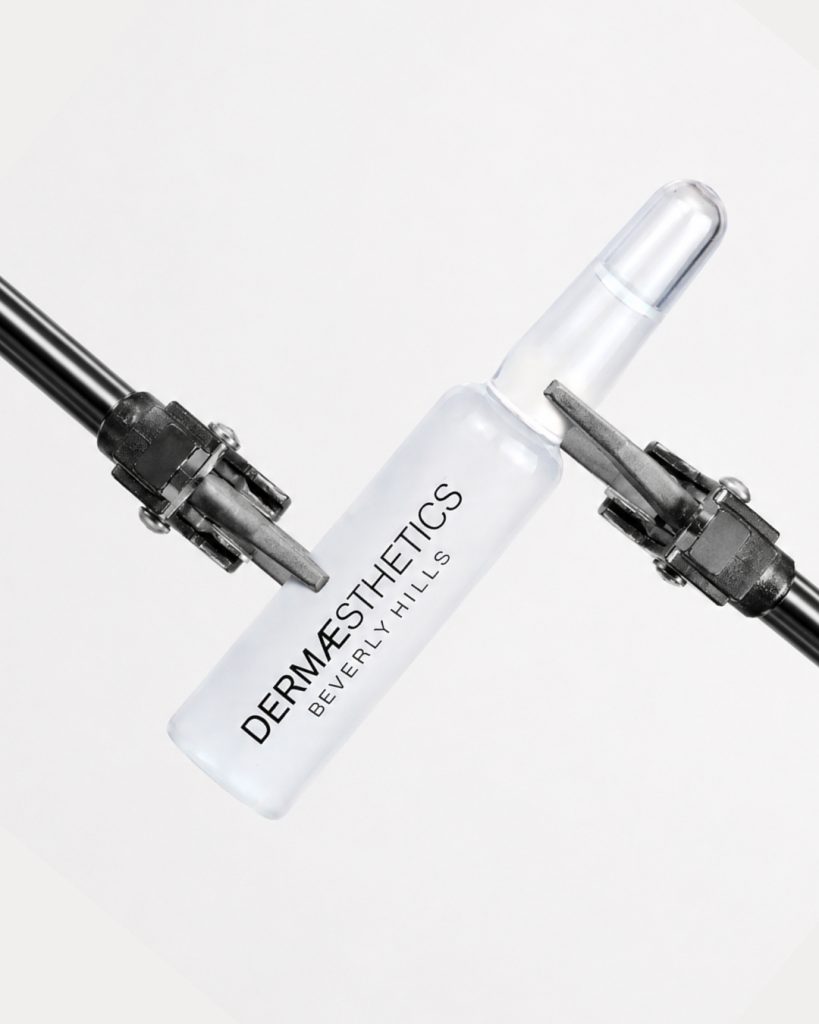
Look Inside The Peel Palette
Depending on the formulation, providers will find carefully selected combinations of:
Alpha Hydroxy Acids (AHAs)
Helping improve texture, brighten skin, and encourage healthy cellular turnover.
Beta Hydroxy Acids (BHAs)
Excellent choices when congestion and acne become the primary concern.
TCA
Offering deeper corrective potential where appropriate.
Tranexamic Acid
An increasingly important ingredient when addressing pigmentation concerns.
Enzymes and Botanical Extracts
Supporting exfoliation while respecting skin function.
Rather than relying on a single hero ingredient or a one-size-fits-all acid blend, each Peel Palette formulation is built around a specific treatment objective. The combination of exfoliating acids and supportive ingredients is selected to address the concern being treated while helping maintain healthier skin throughout the renewal process.
That’s formulation with purpose.
Healthy cell turnover is fundamental to healthy skin. As that natural renewal cycle slows with age and cumulative damage, concerns like uneven pigmentation, acne, rough texture, milia, and visible signs of aging become more common. The Peel Palette is designed to encourage healthy skin renewal through a modern combination of exfoliating acids and supportive ingredients, taking a gentler but still corrective approach that respects the skin throughout the recovery process.
The Consultation Still Comes First
Here’s something we genuinely appreciate about DBH’s philosophy.
The Peel Palette doesn’t replace clinical judgment.
It supports it.
Before selecting any peel, providers should still evaluate:
- Primary concern
- Current skin condition
- Fitzpatrick type
- Treatment history
- Skin tolerance
- Home care routine
- Desired outcome
The Peel Palette simply creates a structured bridge between assessment and treatment selection.
That’s exactly how professional systems should function.
They guide decision making.
They don’t make decisions for you.
A Very Korean Way of Thinking
There’s a reason this system feels different.
DBH’s roots are firmly planted in Korean clinical skincare.
Founded in 1988, the company has spent decades focusing on professional treatment systems rather than chasing consumer trends.
Education.
Customization.
Protocols.
Clinical outcomes.
Those principles have been part of Korean professional skincare long before the rest of the world started paying attention.
The Peel Palette reflects that philosophy beautifully.
It’s organized.
Intentional.
Practical.
Science driven.
And refreshingly focused on helping professionals become better clinicians.
Chemical Peels Deserve Their Comeback
Maybe chemical peels never actually left.
Maybe we just became distracted.
While everyone debated the newest ingredient trend, chemical peels quietly continued delivering meaningful, measurable improvements for acne, pigmentation, texture, aging, and overall skin health.
DBH simply reminded us that innovation doesn’t always mean inventing something new.
Sometimes it means improving the way we think about something we’ve trusted for decades.
The Peel Palette isn’t exciting because it’s colorful.
It’s exciting because it helps providers make smarter clinical decisions.
It respects education.
It supports customization.
It simplifies treatment planning without sacrificing science.
And honestly?
That’s pretty sexy.
About Dermaesthetics Beverly Hills
Founded in 1988, Dermaesthetics Beverly Hills (DBH) is a professional Korean clinical skincare company dedicated to licensed skincare professionals, medical spas, dermatology practices, and aesthetic providers. The company develops science-based formulations, corrective treatment systems, educational protocols, and practical clinical solutions that help professionals deliver customized treatments with greater confidence. Their philosophy centers on combining advanced Korean skincare science with real-world treatment room practicality, giving providers the tools to make smarter clinical decisions while achieving exceptional patient outcomes.