Hair restoration has rapidly evolved from a niche offering into one of the most dynamic growth sectors in aesthetics, with 1 in 4 Americans suffering from hair loss, and by age 65, about 53% of men and 37% of women will experience it [1]. As GLP-1 medications become more widely used and patients are relying on medical spas less and less for those medications because direct-to-consumer is taking over the market, we have shifted our focus to addressing the aftereffects of these life-changing medications by offering new technology and combining modalities to give patients dramatic results that improve their self-esteem and outlook on life. I have no financial disclosures for the technology mentioned here, but purely a fan of science, beauty, and keeping my long mane as robust and healthy as possible.


Laser Technician + Medical Esthetician Reviews L+A
Gwendolyn Howard, CLT and LE
I’m delighted with the platform Lipgloss and Aftershave has established for our industry. Their informative videos and up-to-date articles not only offer educational content but also keep me informed about the latest trends and future of aesthetic services. Furthermore, they provide valuable business insights from professionals in our community, offering honest advice on machine platforms, tools, equipment, social media, and skin care lines. Thank you, Jenni and Barry, for maintaining a fun and authentic approach to our platform.
Dr. Lunderville’s 3 Innovations in Hair Growth
1. Alma TED: Innovation in Delivery and Accessibility
Alma TED represents a meaningful shift in how we think about hair growth treatments, not by introducing a new drug or laser, but by reimagining delivery.
This device is affordable and effective in utilizing ultrasound and air pressure to deliver key ingredients past that stubborn and thick stratum corneum that we all have covering our head and scalp. There are no needles, downtime, or discomfort. Clinically, what I have seen is consistent improvement in hair density, reduced shedding, and healthier scalp environments when used in a structured treatment plan, although many patients experience this after 1 treatment.
Also, the accessibility!!! It is NOT a laser; it is a class II medical device that an aesthetician can also use, but we have also found it profitable in our medical spas, and I recommend it to nurses all the time for their practices.
- Appropriate for medspas and adaptable for aestheticians and injectors
- Can be integrated into cosmetology or hair styling practices looking to elevate their service menu
- Supports post-device application of peptides, growth factors, exosomes, and advanced topicals
2. FoLix: Direct Follicular Stimulation with FDA Clearance
FoLix represents a different kind of innovation, one rooted in direct biological stimulation. This FDA-approved non-ablative fractional laser is designed specifically to activate hair follicles through controlled microthermal zones in the scalp, triggering regenerative and wound healing pathways. Think laser level results with appropriate medical clearance, scope, and aftercare, as well as results.
From a regulatory and operational standpoint, FoLix is a more exclusive technology.
- FDA-approved specifically for hair loss
- Classified as a laser, requiring RN or higher, depending on your state.
- Delivers precise energy to stimulate follicles directly
- Higher capital investment and more structured clinical protocols
FoLix is exciting because it offers a device-based solution that does not rely on topical penetration, and you can really set your practice apart by offering dramatic results only a nurse or higher can deliver. It is also more expensive, both in upfront cost and operational complexity. For the right practice, particularly those with medical infrastructure already in place, it represents a powerful addition that one could build an entire practice around. If you are thinking of launching a hair growth-based focus, I recommend incorporating lab work, supplementation, and a comprehensive diagnostic and lifestyle approach.

3. Peptides and the Promise of GHK-Cu
Peptides are one of the most promising frontiers in hair restoration, especially GHK-Cu. This copper peptide has been studied for its role in follicular stimulation, angiogenesis, and anti-inflammatory effects. Of note, it is not FDA approved and still “experimental,” so be sure to follow the appropriate informed consent, insurance, training, and sourcing for your products. Check out January’s article, all about peptides, for more information.
What makes peptides compelling is their versatility.
- Can be used topically or via injection, depending on scope and regulation
- Support scalp health, hair thickness, and follicular signaling
- Integrate seamlessly into long-term hair wellness plans
Practice Management: Packaging for Success
From a business perspective, hair growth treatments should never be offered in isolation. Outcomes improve and retention increases when services are packaged thoughtfully.
- Combine devices with peptides and post treatment topicals
- Create multi-session programs rather than single treatments
- Educate patients on GLP-related hair shedding and proactive care
- Position hair restoration as part of a broader wellness and longevity conversation, incorporating memberships
Hair growth is no longer a fringe service. It is a fast-growing category driven by real patient needs and supported by meaningful innovation. The practices that will lead are those that understand not just the technology, but how to deploy it accessibly, ethically, and strategically.
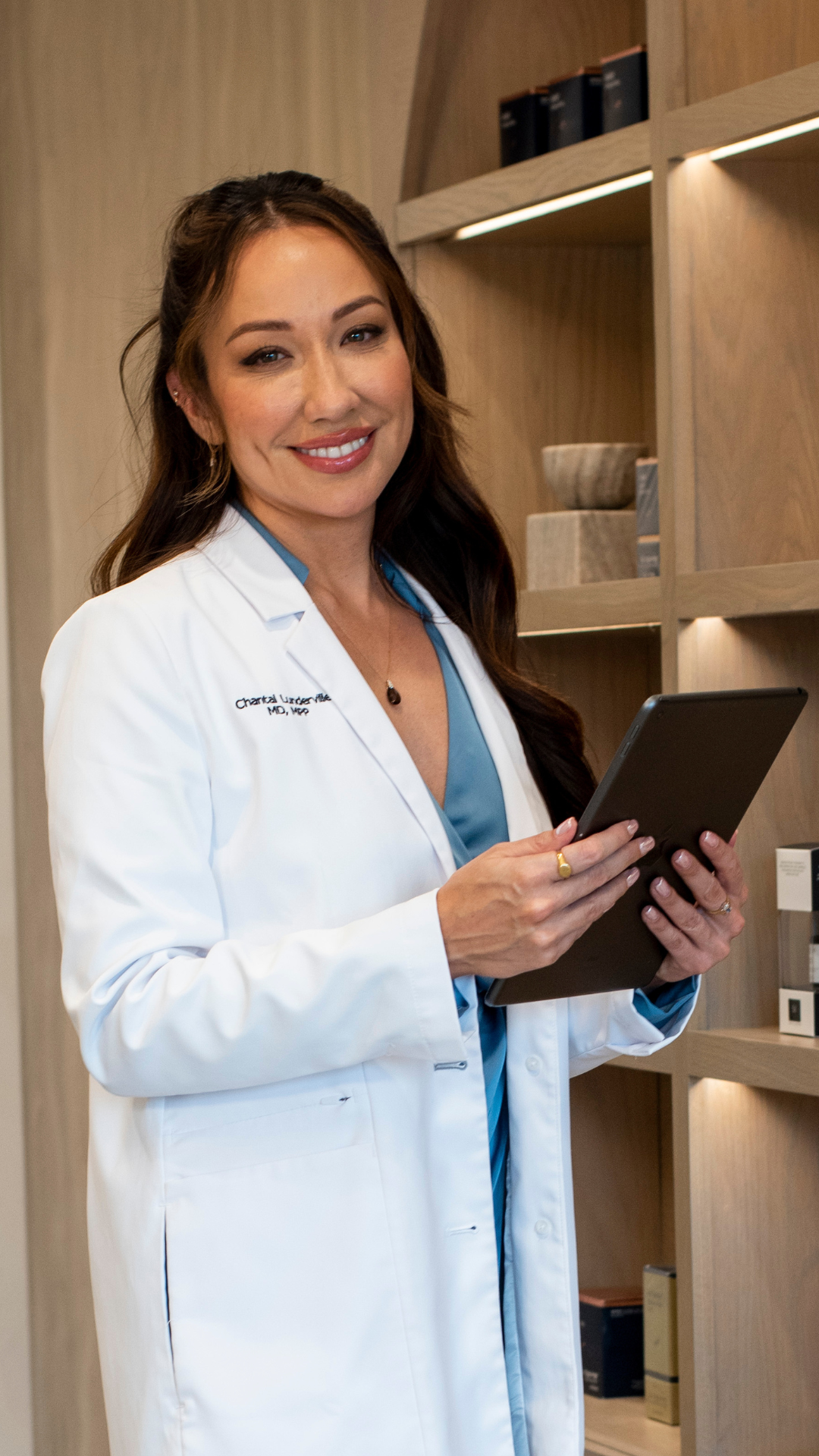
Dr. Chantal Lunderville, L+A Medical + Wellness Editor
Dr. Chantal Lunderville is a board-certified physician specializing in skin health, aesthetic medicine, and Women’s health. She attended medical school at UCLA School of Medicine, followed by a residency at UCSF Family Medicine, and on graduating opened her own concierge aesthetics practice in the San Francisco Bay Area focusing on hormone health, skincare, and longevity.
Since then Dr. Lunderville has grown her practice to include overseeing nurses and aestheticians as medical director to over 15 practices across California, and through Dr. C’s Academy helps to launch new practices across the US and Canada through consulting and online courses in business, compliance, aesthetic procedures including neurotoxin, fillers, lasers, microneedling, and lasers. Read Full Bio
Citations
[1] National Council on Aging. “Hair Loss: Causes, Types, and Other Facts.” National Council on Aging, 17 Dec. 2025