More Than Skin Changes
Menopause is often discussed in terms of hormones, hot flashes, and visible skin changes. While these are important considerations for estheticians, there is another layer that is rarely spoken about, yet deeply felt by many clients.
Touch.
For many women, menopause coincides with a shift in how often they are physically touched. Libido may decrease, relationships may change, or a partner may no longer be present due to loss or separation. Without realizing it, many women move from a life of regular, familiar touch into one where it becomes infrequent or even absent.
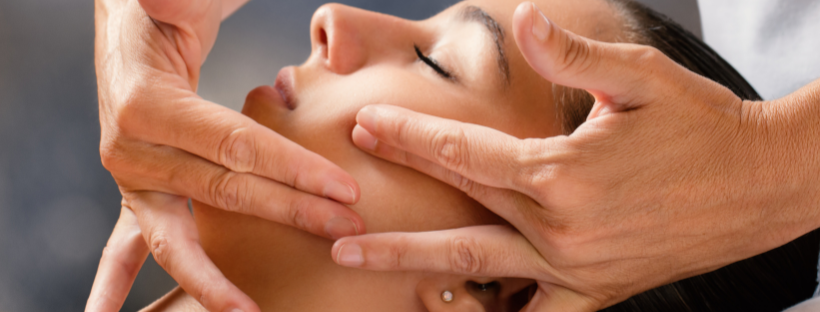
As estheticians, this is something we are uniquely positioned to respond to. Not by overstepping boundaries, but by understanding that what we offer is more than a treatment. It is safe, professional, intentional human contact, and that carries real weight.
Structural Changes in the Skin
From a technical standpoint, menopausal skin presents clear and measurable changes. Declining estrogen levels lead to reduced collagen production, thinning of the epidermis, and a gradual weakening of the skin’s structural support. Skin often becomes more fragile, less elastic, and slower to recover.
At the same time, sebum production decreases, which can leave the skin drier and more prone to sensitivity and barrier disruption. These changes require an adjustment in how we approach touch.
Changes in Tissue and Muscle Response
With age, there is also a gradual loss of muscle mass, including in the face. This affects not only appearance, but also how the tissue responds under the hands. Movements that once felt stimulating can begin to feel excessive.
The tissue no longer has the same density or resilience, and overly forceful or repetitive techniques can feel intrusive rather than beneficial.
How Touch Is Perceived Differently
What is less often discussed is how the perception of touch changes. It is not that menopausal skin has fewer sensory nerve endings. Rather, the environment around those nerves shifts.
As the skin becomes thinner and less supported, nerve endings sit closer to the surface and are less cushioned. This can make touch feel more direct, more noticeable, and at times more intense. Some clients become more sensitive for this reason, while others may still prefer or even seek out firmer pressure.
This is where observation and communication become essential, as responses can vary significantly from one client to another.
Educational Yoga
Face Yoga
Face Yoga isn’t just facial exercises. It’s a holistic framework rooted in the principles of yoga that addresses the whole person: the muscles, the lymphatic system, the nervous system, and the mindset. When clients learn to regulate from within, the results of everything you already offer—including injectables, microneedling, peels, and advanced skin treatments—go further, last longer, and feel more transformative.
A Client Experience That Stayed With Me
Years ago, I treated a woman who had been a passenger on a ten-day cruise. What struck me most was not her skin, but her experience. She told me she had barely left the ship the entire time. While other passengers went ashore, she chose to stay on board, enjoying the quiet companionship of fellow travelers and the attentiveness of the crew.
There was something in the way she spoke. She sounded content, but also quietly aware of what she was missing.
When she came in for a body massage, she asked for the lightest possible touch. Not firm, not deep, just gentle, continuous contact. As the treatment unfolded, it became clear that she was not seeking muscle work or correction. She simply wanted to feel a human connection. She later shared that she missed being touched.
That experience stayed with me. It highlighted something we do not often say out loud. For some clients, especially at certain stages of life, touch itself becomes the treatment.
Rethinking Technique in the Treatment Room
In an industry that often promotes lifting, sculpting, and visible results, it is worth questioning whether stronger techniques are always appropriate.
Many menopausal clients respond far more positively to slower, more intentional movements. Techniques that focus on rhythm, consistency, and connection often create a deeper sense of ease than those designed to manipulate or force change. This does not mean abandoning structure, but refining how it is delivered so the work remains both effective and appropriate for the tissue in front of you.
The Nervous System Response
Touch also has a direct impact on the nervous system. Consistent, intentional contact can reduce stress markers and support a shift into a more relaxed state.
For menopausal clients, who may be navigating disrupted sleep, increased stress, or emotional changes, this becomes particularly valuable. The treatment room can become one of the few places where they are able to fully switch off, even briefly, and that alone can influence how they feel both during and after the treatment.
When Touch Becomes the Treatment
For some clients, your treatment may be one of the only times they are physically touched in a meaningful way. This is not always spoken about, but it is often present. A client who lives alone, is widowed, or is in a relationship where physical affection has diminished may experience your work very differently from someone who receives regular touch in their daily life.
This awareness does not require you to do more, but it does invite you to be more intentional in how you work. Maintaining continuous contact rather than breaking away abruptly can make a noticeable difference. Slowing transitions allows the nervous system time to respond, and a moment of stillness, when appropriate, can help the client settle more deeply. These are small adjustments, but they change how the treatment is experienced.
Professional Boundaries and Human Connection
It is important to be clear that this awareness does not mean crossing professional boundaries. What we offer remains structured, skilled, and professional.
At the same time, it is human. When delivered with care and intention, it can meet a need that goes beyond skincare.
Conclusion
In an industry focused on visible outcomes, it is easy to overlook results that cannot be immediately seen. A client may leave without a dramatic change in the mirror, but feeling calmer, more grounded, and more connected to themselves.
For many menopausal clients, this is exactly what they need, and it is often what they remember long after the treatment itself.

Contribution by Gaynor Farmer-Katics
Gaynor Farmer-Katics is dedicated to helping estheticians refine their touch and expand their massage repertoire. With over 40 years of experience as an esthetician, massage therapist, and international educator, she founded Enhanced Touch to provide both online and in-person training. A contributing author to Milady’s Advanced Esthetics textbook, Gaynor also shares monthly insights and practical tips through her blog at www.enhanced-touch.com.
References
Harvard Health Publishing. The role of touch in wellbeing
https://www.health.harvard.edu/mind-and-mood/the-healing-power-of-touch
North American Menopause Society. Menopause Practice: A Clinician’s Guide
https://www.menopause.org/for-professionals/clinical-practice-materials
American Academy of Dermatology. “How Menopause Affects Your Skin”
https://www.aad.org/public/everyday-care/skin-care-basics/menopause/skin-changes
National Institutes of Health. Age-related muscle loss and tissue changes
https://www.nia.nih.gov/health/sarcopenia
Field, T. Touch. MIT Press
https://mitpress.mit.edu/9780262561147/touch/