Menopause is no longer a quiet conversation happening behind closed doors. Women are talking openly about hormonal changes, hair thinning, skin sensitivity, dryness, fatigue, and the emotional shift that can happen when they no longer recognize the face staring back at them in the mirror. And increasingly, they are turning to medical spas and estheticians for support.
Thanks to M.A.D Skincare, KM Herbals, and Face Yoga for sponsoring this article.
The global menopause treatment market, spanning medical, pharmaceutical, and wellness sectors, is valued at approximately $17.8 billion in 2024 and is projected to exceed $24 billion by 2030. That growth is not just happening in traditional medicine. It is rapidly expanding into the aesthetic and wellness industries as women seek treatments that help them feel healthy, confident, vibrant, and supported during every phase of hormonal change.
For skin professionals, this is more than a trending conversation. It is a major opportunity to become a trusted resource for clients navigating one of the most transformative periods of their lives.
“During menopause, the drop in estrogen has a direct impact on how skin behaves. Collagen, the protein that gives skin its structure, declines rapidly. In fact, studies suggest that up to 30% can be lost in the first few years after menopause.”
That collagen decline often shows up as accelerated skin aging, thinning skin, dehydration, laxity, increased sensitivity, dullness, slower healing, and inflammation. Hair changes are also incredibly common, especially thinning around the temples, crown, and hairline.
In real life, that means clients suddenly start saying things like:
“I feel dry no matter what I use.”
“My skin just looks tired.”
“My makeup doesn’t sit the same anymore.”
“My hair is getting thinner and breaking.”
For estheticians and medical spa professionals, understanding these hormonal shifts creates the ability to build smarter treatment plans, stronger retail recommendations, and deeper client trust.
L+A explored this concept further in the article “A Hormonal Skin Care Strategy Can Boost Sales”, which explained:
“Hormones play a huge role in how skin changes and ages. It is also one of the most overlooked drivers of client results and retail sales.”
The article goes on to emphasize that hormonal skin care is not one-size-fits-all. The treatments and products that support a client in perimenopause may look very different from what is needed post-menopause. That creates an enormous opportunity for customization, consultation, and long-term treatment planning.
Why Medical Spas Are Perfectly Positioned
Medical spas sit at the intersection of aesthetics, wellness, and longevity. That makes them uniquely positioned to support menopause patients from both an external and internal perspective.
In her article “3 Predictions for the Future of Medical Aesthetics”, Dr. Chantal Lunderville explained:
“The future of aesthetics is rooted in treating the patient both inside and out.”
She highlights the importance of addressing:
- Inflammation
- Hormonal balance
- Stress and nervous system regulation
- Cellular metabolism
- Oxidative stress
This whole-patient approach is becoming increasingly important as clients look for practitioners who understand that menopause is not simply about wrinkles. It is about quality of life, confidence, comfort, and overall wellness.
Medical spas also have the ability to bridge multiple categories of care in a way traditional beauty settings often cannot. A client may come in initially seeking help for dry skin or hair thinning, but through thoughtful consultation, providers can begin building a larger wellness-focused treatment strategy that incorporates skin rejuvenation, scalp support, stress management, nutritional guidance, home care, and collaboration with medical providers when appropriate.
That integrated approach is exactly why menopause care is becoming such an important category in the aesthetics industry.
Estheticians Have a Unique Emotional Role
One of the most powerful parts of this conversation is that estheticians often spend more time with clients than many other providers. That relationship matters.
In her deeply personal L+A editorial piece, “How Estheticians Can Help Clients Feel Seen + Strong”, Tiffany Underwood writes:
“We’re not just treating fine lines — we’re treating identity shifts.”
That perspective changes everything.
Menopause clients are not simply booking facials. They are often looking for reassurance, education, support, and someone who understands what they are experiencing.
Underwood encourages professionals to:
- Ask about hormonal changes during consultations
- Normalize menopause conversations
- Offer education without overwhelming clients
- Encourage rituals and routines that feel nurturing
- Celebrate small improvements
That emotional support becomes part of the treatment experience itself.
And honestly, sometimes the biggest transformation is not what happens to the skin. It is what happens when a client finally feels understood. In an industry obsessed with before-and-after photos, there is something incredibly powerful about helping someone feel comfortable in their own skin again.
A Must-Have Resource Guide for Skin Professionals
One of the best starting points for estheticians and medical spas looking to better support menopause patients is The L+A Guide To MediSpa Services for Menopause Patients.
The guide explores:
- Skin care options for menopause patients
- Supplements and wellness support
- Hair rejuvenation strategies
- Lash and brow solutions
- Overall wellness services
For practices looking to create menopause-focused treatment menus, consultation strategies, retail programs, or educational campaigns, this guide serves as an excellent roadmap.
It also helps professionals understand that menopause support extends far beyond a single facial or serum recommendation. Clients are increasingly looking for complete care ecosystems that acknowledge the physical, emotional, and hormonal changes happening simultaneously.
Receive an instant guide by providing your email address below. Then, check your inbox!
By submitting your information below, you understand we are sharing your information with the sponsor.
Please type responses. DO NOT AUTOFILL! Autofill responses are rejected.
3 Go-To Menopause Support Treatments for Estheticians
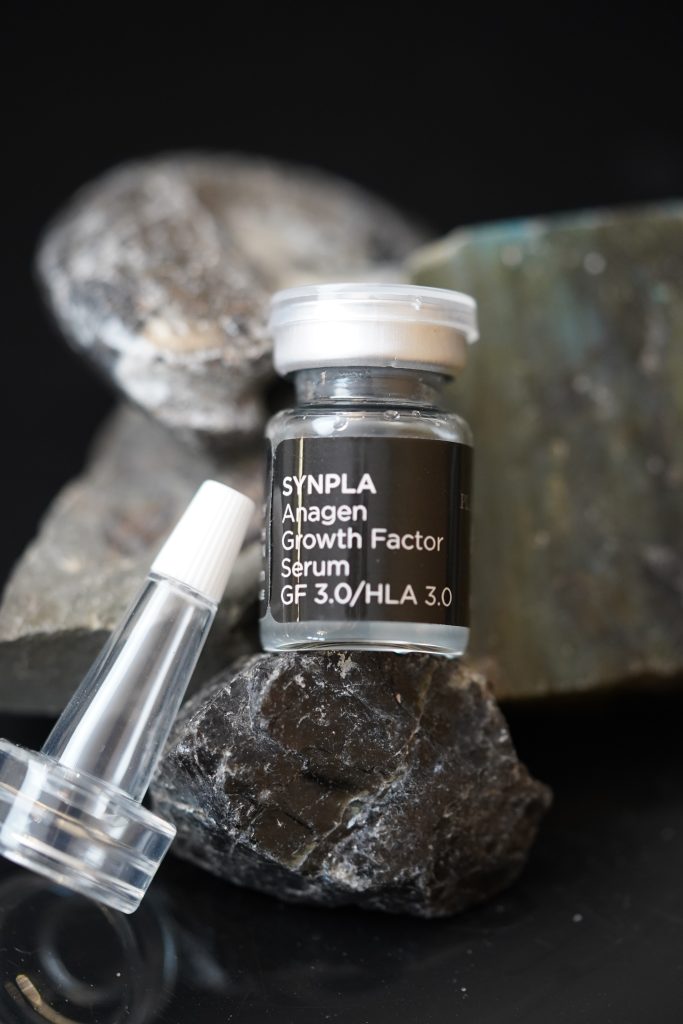
M.A.D Skincare’s SYNPLA Anagen Growth Factor Treatment
Hair thinning during menopause is one of the fastest-growing concerns in aesthetics right now, yet many clients still feel embarrassed talking about it.
That is why treatments like the M.A.D Platinum SYNPLA Anagen Growth Factor Treatment are becoming increasingly valuable inside treatment rooms.
Powered by five advanced synthetic growth factors, the treatment is designed to support hair thickness, follicle density, and scalp regeneration. The formula combines growth factor technology with arginine and multiple forms of hyaluronic acid to create a scalp-focused rejuvenation treatment that supports healthier-looking, fuller hair.
In a May 2026 L+A editorial feature, Michael Contorno of M.A.D Skincare noted:
“One increasingly growing topic transcending multiple industries and gaining the awareness it deserves is hair loss and thinning in women during menopausal phases.”
L+A previously featured the SYNPLA Anagen Growth Factor Serum combined with scalp hydrodermabrasion and microchanneling, showcasing how estheticians can integrate advanced scalp rejuvenation into existing service menus.
For clients struggling with menopausal hair thinning, this creates an opportunity for estheticians to address concerns that often go untreated in traditional spa settings.
It also opens the door to long-term treatment planning and retail support. Home care scalp serums, stimulation tools, nutritional conversations, and consistent in-clinic treatments can all become part of a larger menopause-support strategy.
KM Herbals Bloom & Balance Detox Facial With LED Light Therapy
Menopause does not always present as dry skin. For some women, fluctuating hormones trigger breakouts, inflammation, congestion, and heightened sensitivity all at once.
That is where the Bloom & Balance Detox Facial by KM Herbals fits beautifully into a menopause-support strategy.
This botanical acne treatment combines LED Light Therapy and two all-new professional products. The AHA Pineapple & Papaya Mask, a professional-strength exfoliating mask that combines 15% AHAs with fruit enzymes to gently dissolve dead skin buildup. The Pure Detox Seaweed Mask, a professional-only mask designed to purify breakout-prone skin while restoring hydration. Finally, KM Herbals includes barrier-supportive ingredients designed to calm inflammation without stripping the skin.
What makes this treatment especially relevant for menopausal clients is its barrier-conscious approach. As hormonal shifts compromise skin resilience, overly aggressive acne treatments can often worsen irritation and dehydration.

KM Herbals approaches the skin through a botanical and holistic lens, combining herbal wisdom with professional-grade treatment protocols. For clients navigating stress, inflammation, sensitivity, and hormonal breakouts simultaneously, treatments like this provide results while still feeling nurturing and restorative.
It also aligns with the growing movement toward wellness-focused aesthetics, where the sensory experience of the treatment matters just as much as the visible outcome.
For many clients, especially those experiencing stress and sleep disruption during menopause, treatments that feel calming to the nervous system can be just as impactful as the visible skin benefits themselves.
Face Yoga for Menopausal Skin
Not every menopause-support solution needs to involve devices, injectables, or aggressive resurfacing. Sometimes the most powerful additions are the ones that help clients reconnect with their bodies.
Face Yoga has emerged as a meaningful complement to professional treatments, especially for menopausal skin.
Through intentional facial exercises, lymphatic drainage movements, breathwork, and muscle activation, Face Yoga supports circulation, relaxation, detoxification, and tension release.
Research from Northwestern University Medicine found that a 20-week facial exercise program improved facial appearance and created fuller cheeks, with participants appearing nearly three years younger.

Where Face Yoga becomes especially interesting for estheticians is when it is paired with clinical treatments like microchanneling. While advanced treatments stimulate collagen production and cellular renewal, Face Yoga helps support circulation, lymphatic flow, and stress reduction, all of which can enhance and prolong visible results.
For menopause clients, this combination creates something particularly powerful: treatments that support both emotional well-being and visible skin rejuvenation.
And in an industry increasingly focused on longevity, nervous system regulation, and whole-body wellness, that holistic integration feels very aligned with where aesthetics is heading next.
The Future of Menopause Support in Aesthetics
The menopause conversation is no longer niche. It is becoming one of the most important opportunities in modern aesthetics.
For years, many women felt dismissed when discussing symptoms tied to hormonal change. Now, the aesthetics industry has an opportunity to create a different experience. One rooted in education, empathy, science, and personalized support.
Medical spas and estheticians are uniquely positioned to lead this shift because they already understand something incredibly important: healthy skin is connected to the whole person.
The future of menopause care inside aesthetics will likely include more advanced regenerative technologies, more wellness integration, more scalp and hair rejuvenation services, and more collaborative care between estheticians, wellness practitioners, nurses, and physicians.
But perhaps most importantly, it will include more conversations.
Conversations where women feel comfortable talking about what they are experiencing.
Conversations where professionals understand that menopause is not simply an aging concern but a life transition that affects confidence, identity, comfort, and self-image.
And conversations where estheticians and medical spas become trusted partners in helping clients navigate that transition with support, education, and compassion.
Because ultimately, these clients are not just looking for younger-looking skin.
They are looking to feel like themselves again.