Over the past decade, few concepts have gained as much attention in aesthetic medicine as combination therapies. Scientific meetings, educational workshops, and clinical discussions increasingly revolve around the advantages of combining technologies, injectables, regenerative medicine, and medical skincare to achieve superior outcomes. As clinicians, we have embraced the idea that multiple interventions often produce better results than a single treatment alone.
However, I have come to believe that combination therapies are not the real story.
Rather, they are the natural consequence of a much deeper transformation in the way we understand ageing itself.
Earlier in my career, treatment planning often began with identifying the patient’s primary concern. A wrinkle was softened, volume was restored, pigmentation was treated, or skin laxity was tightened. Every concern appeared to have its corresponding solution, and our success was largely measured by how effectively we corrected that visible problem.
While this approach undoubtedly advanced our specialty, years of clinical practice, reconstructive surgery, regenerative treatments, and international teaching gradually changed the way I looked at ageing. The more patients I treated, the more I realised that no wrinkle exists in isolation, no area of laxity develops because of a single cause, and no patient can truly be understood by examining only what is visible on the surface.
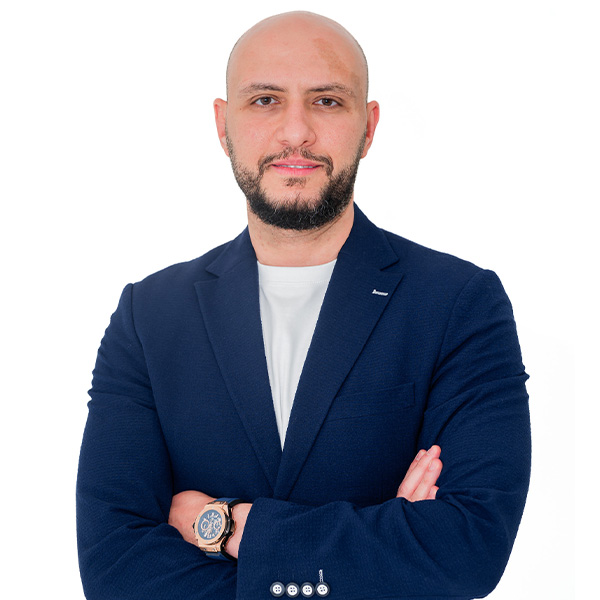
Contribution by Dr. Abdulrahman Abdulbaky, MD, MRCS
Dr. Abdulrahman Abdulbaky is a UK-based Consultant Plastic Surgeon whose work sits at the intersection of surgical precision, aesthetic artistry, and global medical innovation. With clinical experience spanning three continents, Africa, the Middle East, and the United Kingdom, his approach is shaped by a truly international perspective on beauty, anatomy, and patient care.
GMC-registered and advancing toward FRCS (Plast), Dr. Abdulbaky brings advanced international training and a meticulous, design-led eye to every treatment. He is the Founder of ÉLÉVÈ AESTHETICS, a modern aesthetic practice built on the principles of refinement, balance, and intelligent enhancement. The brand’s clean, elevated identity reflects his belief that the highest standard of aesthetic medicine should feel considered, bespoke, and quietly transformative, never overdone.
In addition to his private practice, Dr. Abdulbaky serves as Co-Director of OMNIERE Clinics, collaborating on high-end aesthetic experiences that merge medical science with luxury patient care. His clinical expertise spans plastic surgery, aesthetic medicine, and regenerative techniques, with particular focus on advanced facial fillers, nano-fat applications, and cutting-edge energy-based technologies, including FaceTite and BodyTite.
Ageing is not one process.
It is the cumulative result of multiple biological, structural, functional, and mechanical changes occurring simultaneously across different tissue layers. Each layer follows its own ageing trajectory, influenced by genetics, environmental exposure, hormonal changes, lifestyle, inflammation, repetitive movement, and the body’s intrinsic ability to repair itself. What we eventually observe clinically is simply the visible expression of these complex interactions.
As reconstructive surgeons, we are taught to think in layers. Every operation reminds us that skin, subcutaneous tissue, fascia, ligaments, muscle, and bone each play distinct roles in both form and function. Regenerative aesthetics has reinforced this principle by reminding us that biology is equally important. Understanding anatomy explains where ageing occurs, but understanding tissue biology helps explain why it occurs and how it might be influenced.
This perspective has fundamentally changed the way I approach both facial and body rejuvenation.
Facial ageing, for example, cannot be explained solely by volume loss. It reflects progressive changes in skin quality, collagen architecture, extracellular matrix integrity, ligamentous support, fat compartment behaviour, muscular dynamics, skeletal remodelling, and the continuous influence of mechanical forces generated through expression and movement. Similarly, body ageing extends far beyond skin laxity or adipose accumulation. The abdomen following pregnancy, the upper arms, thighs, neck, or hands each demonstrate unique interactions between tissue quality, mechanical loading, structural support, collagen depletion, and environmental influences. Treating only one layer rarely restores harmony throughout the entire anatomical unit.
Perhaps this is why combination therapies have become so successful.
Not because combining treatments is inherently better, but because ageing itself is multifactorial. No single technology, injectable, or procedure can simultaneously address every biological pathway involved in tissue degeneration. Energy-based devices stimulate collagen remodelling and tissue contraction, regenerative injectables enhance cellular activity and extracellular matrix repair, collagen biostimulators promote structural restoration over time, while medical skincare and lifestyle optimisation influence inflammation, pigmentation, barrier function, and long-term tissue health. Each modality contributes to a different aspect of regeneration, and together they create outcomes that are greater than the sum of their individual effects.
The real value of combination therapies therefore lies not in performing multiple procedures during the same appointment, but in understanding why each treatment has been selected. Successful treatment plans are not built around products or technologies; they are built around pathology. They begin by identifying which biological processes have changed, which anatomical layers have been affected, and which regenerative mechanisms need to be supported.
This shift has also transformed the consultation itself. Increasingly, I find that the most valuable part of patient care is not deciding which treatment to perform, but understanding the patient’s unique pattern of ageing before any treatment is considered. Two individuals presenting with similar clinical concerns often require entirely different treatment strategies because the underlying mechanisms responsible for those concerns are fundamentally different. The consultation has therefore evolved from selecting procedures to establishing a diagnosis of ageing.
One of the greatest privileges of teaching internationally is the opportunity to observe how aesthetic medicine evolves across different healthcare systems and cultures. Although treatment preferences, available technologies, and regulatory frameworks may differ, one observation has remained remarkably consistent. Experienced clinicians are increasingly moving away from procedure-centred thinking and toward biology-centred thinking. Regardless of where we practise, we are asking the same question: not “What treatment should I use?” but “Why has this tissue aged in this particular way?”
I believe this represents one of the most important philosophical changes our specialty has experienced.
The future of regenerative aesthetics will not be defined by discovering another injectable or developing another energy-based device. Innovation will certainly continue, but its greatest impact will depend on our ability to integrate these advances into a deeper understanding of tissue ageing. Artificial intelligence, advanced imaging systems, and objective biomarkers will undoubtedly enhance our diagnostic capabilities, yet they will never replace thoughtful clinical reasoning or a comprehensive appreciation of anatomy, biomechanics, and tissue biology.
Perhaps the next evolution of combination therapies will not be about combining more treatments, but about combining them more intelligently.
As our understanding of ageing continues to mature, treatment planning will become increasingly personalised, not because we have more products available, but because we have developed a better understanding of the biological processes that drive ageing across every anatomical layer.
Ultimately, combination therapies are not the destination of regenerative aesthetics.
They are the result of a more sophisticated way of thinking.
When we stop treating individual symptoms and begin understanding the complex biological conversation taking place between skin, connective tissue, fat, muscle, fascia, ligaments, and bone, combination therapies cease to be a trend. They become the logical expression of precision medicine, where every intervention has a purpose, every treatment sequence has a rationale, and every patient receives a strategy tailored not only to how they look, but to how they age.
In the years ahead, I believe this shift from combining treatments to understanding aging will define the next chapter of aesthetic medicine.