
August at L+A is all about The Science of Skincare, which means we are looking past the pretty packaging, impressive before-and-afters, and shiny treatment-room toys to ask a slightly more important question: What is actually happening in the skin?
That question is especially relevant as the aesthetics industry becomes increasingly interested in treatments designed to work with the body’s own biological processes. PRP, growth factors, exosomes, microneedling and other advanced procedures have pushed practitioners to think differently about rejuvenation. The conversation is becoming less about temporarily correcting what we see and more about creating conditions that support healthier-looking, better-functioning tissue over time.
And that brings us to something every cell needs to do its job: energy.
We’re so grateful to NeurotriS for sponsoring this article so we can share how Dynamic Intelligent Microcurrent™ enters the conversation.
Rather than thinking about a treatment plan as a collection of individual procedures, NeurotriS encourages professionals to consider the condition and function of the tissue receiving those treatments. Because if we are asking skin to repair, renew, and respond, it makes sense to also consider the cellular environment in which all that activity is supposed to happen.
Welcome to the conversation around cellular skin health. Things are about to get electric.
Cellular Skin Health Is Becoming Part of the Bigger Aesthetics Conversation
For years, aesthetics was largely organized around correction.
See a wrinkle? Smooth it.
See laxity? Tighten it.
See pigment? Resurface it.
See volume loss? Restore it.
None of those goals have disappeared, of course. But sophisticated treatment planning is increasingly asking another question: How well is the tissue functioning underneath what we can see?
That shift matters.
Skin Results Start With Skin Function
Skin is living tissue, which means virtually everything we ask it to do requires energy. Cellular communication, protein synthesis, repair processes, and normal physiological activity do not happen simply because we booked a 60-minute appointment and dimmed the lights.
Cells require adenosine triphosphate, better known as ATP, as an energy source for cellular processes. Microcurrent has been studied for its relationship to cellular activity, including research exploring electrical stimulation and ATP production.
This is one reason microcurrent has become particularly interesting within conversations about cellular skin health.
The concept is not that one device magically “regenerates” the skin. Science is rarely that convenient, no matter how much Instagram might enjoy a 12-second explanation.
The more interesting conversation is how different technologies can play different roles within a thoughtfully designed treatment strategy.
One Treatment Does Not Have to Do Everything
A procedure such as microneedling may be selected to create a controlled response within the skin. Professional skincare may be used to address hydration, barrier support, antioxidants or other specific concerns. Home care may help maintain the environment between appointments.
Microcurrent brings another tool to that plan.
Professional microcurrent uses low-level electrical currents and can be incorporated to support facial muscle stimulation, toning, circulation, and the appearance of healthier, more energized skin.
The key is not asking microcurrent to replace another modality.
It is understanding what it contributes.
And frankly, this is where aesthetics gets much more interesting. The future is not necessarily about finding one machine that does everything. It is about understanding the physiology well enough to know why, when, and how technologies belong together.
Where Microcurrent Fits Into a Modern Treatment Plan
Think of the treatment plan less like ordering one entrée and more like building a very strategic tasting menu. Every course has a job.
Advanced procedures can create a biological stimulus. Skincare can provide ingredients and environmental support. Microcurrent can be incorporated as part of an ongoing strategy focused on tissue function, muscle stimulation and maintenance.
That makes it particularly relevant for professionals thinking beyond immediate correction.
Supporting the Skin Before, Between and After Advanced Treatments
The growing focus on cellular skin health also encourages practitioners to think about the entire client journey.
What condition is the skin in before an advanced treatment?
What happens between appointments?
How are results maintained?
What complementary modalities make sense for that individual client?
Not every modality belongs in every protocol, and treatment timing, contraindications, and scope of practice always matter. But the broader philosophy is important. A treatment plan can extend far beyond the day a major procedure is performed.
Microcurrent can stand alone as a professional service, but it can also become part of a longer-term strategy designed around maintaining facial tone and supporting the appearance and function of the tissue.
The Goal Is Not More. It Is Smarter.
This is an important distinction.
Advanced aesthetics does not need to become a game of treatment-room Jenga where we keep stacking modalities until somebody gets nervous.
More technology is not automatically better technology.
The opportunity is to understand what each modality does, where it fits, and how it may complement the client’s larger plan.
That is where NeurotriS has built an interesting position.
NeurotriS SX3300 Brings Intelligence to Cellular Skin Health
The NeurotriS philosophy centers on the idea that tissue is not static.
Skin composition and electrical characteristics can vary from client to client, which raises an obvious question: Why should every treatment deliver exactly the same fixed electrical output?
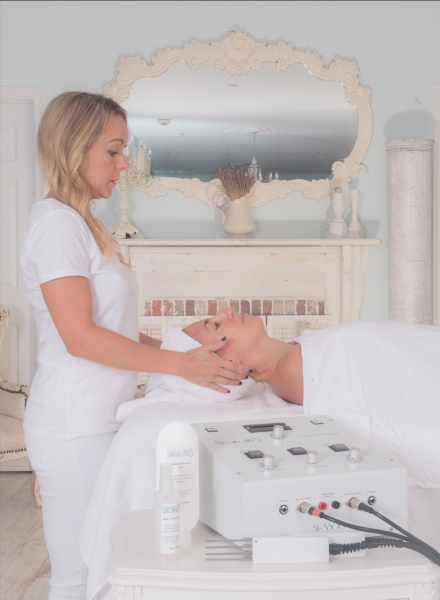
Enter the NeurotriS SX3300 Dynamic Intelligent Microcurrent Facial Sculptor.
The professional system is designed for non-invasive facial sculpting, muscle re-education and visible skin rejuvenation, but the technology behind it is what makes the SX3300 particularly relevant to our Science of Skincare conversation.

Dynamic Intelligent Microcurrent™ Is Designed to Adapt
Unlike conventional systems that deliver a fixed output, NeurotriS says the SX3300 uses its proprietary Dynamic Intelligent Microcurrent™ technology to analyze the client’s skin composition and electrical characteristics and automatically optimize its output throughout treatment.
In other words, the machine is not simply sending out a signal and calling it a day.
It is designed to respond to the tissue.
That adaptive approach is particularly compelling when viewed through the lens of cellular skin health, because individualized treatment is becoming one of the defining themes of advanced aesthetics.
Practitioners are increasingly evaluating skin condition, treatment history, lifestyle, anatomy, goals, and response instead of relying exclusively on standardized protocols. Technology that is designed to adapt fits naturally into that philosophy.
Sculpting Is Only Part of the SX3300 Story
Yes, facial sculpting gets attention. We all enjoy a good jawline.
But NeurotriS positions the SX3300 as more than a contouring device.
The system is designed to provide professional facial muscle stimulation and re-education while supporting firmer, more youthful-looking skin. Treatments are non-invasive, comfortable, and require no downtime, giving professionals flexibility in how the technology can be incorporated into their treatment menus.
The SX3300 also offers customized treatment protocols, professional ergonomic applicators and minimal consumable costs, and it was designed with high-volume clinical use in mind.
For practices looking at both clinical strategy and business practicality, those details matter.
A Technology That Can Live Beyond the “Special Occasion” Facial
Perhaps one of the biggest opportunities is how easily microcurrent can become part of an ongoing relationship with the client.
There are procedures clients may undergo occasionally, and then there are technologies that can become part of a consistent skin-maintenance strategy.
That recurring role makes the SX3300 an interesting addition to treatment plans focused on cellular skin health and long-term tissue quality.
Instead of asking, “What treatment are we doing today?” the conversation can evolve into, “What are we trying to accomplish over the next six months?”
That is a much more sophisticated conversation.
It is also one that can create stronger practitioner-client relationships because the professional becomes the architect of the plan, not simply the provider of an appointment.
Science Gets Better When Practitioners Understand How to Use It
Of course, buying sophisticated technology and understanding sophisticated technology are two very different things.
A machine cannot create an intelligent treatment plan by itself.
NeurotriS supports the SX3300 with an advanced online training platform, live virtual training, clinical education videos, technical support, and ongoing educational resources.
That education is an important piece of the equation because microcurrent should not simply be another service added to a menu with a clever name and a hopeful paragraph.
Professionals should understand what the technology is doing, how protocols can be customized, how it fits with other treatments, and which clients are appropriate candidates.
Ask NeurotriS How the Science Fits Your Practice
If The Science of Skincare is teaching us anything, it is that the next era of professional aesthetics will require practitioners to connect more dots.
Ingredients matter.
Devices matter.
Procedures matter.
Home care matters.
But understanding how those pieces interact may matter even more.
NeurotriS Dynamic Intelligent Microcurrent™ offers practitioners an opportunity to explore another layer of cellular skin health and consider how electrical stimulation, facial muscle re-education, and adaptive technology can fit within a comprehensive approach to modern skincare.
The best next step is not simply reading about the science. Talk to the people who built the technology.
Visit NeurotriS online to explore the SX3300 and its professional systems. Connect with the company on social media to see treatments, education and practitioner results. Better yet, pick up the phone and speak directly with the NeurotriS team about your practice, your existing modalities and how Dynamic Intelligent Microcurrent™ could potentially fit into your treatment strategy.
Because the future of aesthetics probably is not going to be won by the practice with the most machines.
It will be won by professionals who understand exactly why they are using them.