Retail often sits on the sidelines of spa education. But in truth, it should be front and center. In today’s competitive medical and spa skincare landscape, your treatment rooms alone can’t carry the business. Retail is your secret revenue stream, a profit powerhouse, and a key builder of client loyalty. When done right, it becomes a game-changer.

L+A is Official Media Partner to
Awaken Esthetics Retreat
August 15th – August 19th, 2025
Skamania Lodge, Stevenson, WA.
Awaken Esthetics Retreat an immersive three-day program designed exclusively for motivated estheticians seeking to elevate their career and grow their business. This all-encompassing retreat blends personal development, business development, and cutting-edge esthetic education into a transformative experience.
As a spa business strategist and educator with over 40 years of experience, I’ve trained thousands of professionals worldwide. I’ve seen firsthand how just a few strategic shifts can result in double-digit growth. And it doesn’t require more hours, expensive equipment, or a bigger space.
1. Reframe Retail as a Service, Not a Sale
Most spa professionals shy away from selling because they’ve never truly learned the art of the sale. So they guess. And when you’re guessing, it’s easy to feel like you’re being pushy. But here’s the truth. Selling is serving. Clients come to you for visible results. And those results don’t stop when they leave your treatment room.
Home care is the bridge between appointments. If you’re lucky enough to have a SPOC (Single Point of Contact) client who comes in once a month for a facial, ask yourself. What are they doing the other 700-plus hours until their next visit? Skin doesn’t stop regenerating between services. What they apply at home every morning and night is crucial to the results they achieve and the longevity of their treatment outcomes.
Retail is not about pushing products. It’s about extending your expertise far beyond what happens in your treatment room. It goes well beyond your hands. Would you trust your skin transformation to a 20-something TikTok “expert” or to a licensed professional who understands how skin functions, heals, and changes over time? That’s the difference. That’s where transformation and loyalty truly begin.
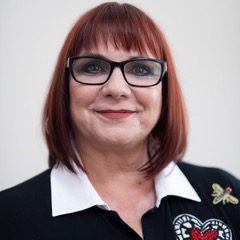
Contribution by Carol Phillips
Carol Phillips, Founder of BeauteeSmarts Global™ and Creator of The Sacred Sales Floor™. Carol Phillips is the founder of BeauteeSmarts Global™ and creator of the Sacred Sales Floor™ system. She is a keynote speaker, retail strategist, and international educator known for her dynamic sales training and business growth strategies. With over 40 years of experience in the professional beauty and medical spa industry, Carol helps spa leaders increase revenue with purpose, passion, and proven systems. Learn more at www.BeauteeSmarts.com.
Pro Tip: Rename your retail area to something that elevates the experience. Try Self-Care Boutique, Homecare Prescription Center, or Skin Transformation Zone. These subtle shifts instantly change the tone, making clients lean in rather than pull back.
2. Build a Retail Map That Mirrors the Client’s Journey
Many spas employ a scattered shelf system, often labeling it a retail strategy. What you need is a Retail Map. A curated, intentional layout that mirrors your services, solves real problems, and guides the client with ease.
Build zones based on problem–solution merchandising.
· Breakouts? Use a clarifying system.
· Redness? Create a calming protocol.
· Dullness? Offer a brightening trio.
· Barrier repair? Add a rebuild kit.
Go deeper and organize products by ages and stages. What does a teen with hormonal breakouts need? How about a bride-to-be or a new mom? What does a 50-year-old looking for firming solutions want to see first? Help your clients see themselves on the shelf.
And don’t forget the body. Add a Body Care Zone near your checkout or lounge area. Include exfoliators, firming creams, hand masks, and SPF. This often-overlooked category can become a valuable source of silent revenue.
Pro Tip: Match your top five services with hero products and build ready-to-go bundles. When your layout reflects the service journey, retail stops feeling random and starts feeling relevant.
3. Use the FAB Formula: Features. Advantages. Benefits.
Every product training should go beyond ingredients. Teach your team to use FAB Statements to simplify and strengthen retail conversations.
Feature: “This serum contains 10% Vitamin C.”
Advantage: “That means it fights oxidative stress effectively.”
Benefit: “So your skin looks brighter and more even after just two weeks.”
When your team learns to connect what’s in the bottle to what it does for the client, retail becomes a form of education. Not a sales pitch.
Pro Tip: During your next team meeting—or if you’re a solo beauty pro—grab a product, set a timer, and challenge yourself to talk about it for 60 seconds. No script. No notes. Just you and the product. Let’s see how much you do know and where the gaps are. It’s a powerful and eye-opening exercise that either builds confidence quickly or reveals exactly why your products aren’t selling because you don’t know enough to make the sale.
4. Turn Your Treatment Room into a Cash Register
Consults and services are gold for retail education. But only when structured with intention. Use a visual prescription pad, mirror talk technique, and before-and-after photo tools to anchor the product conversation in what the client actually sees and feels.
Sprinkle your professional recommendations throughout the service. Mention ingredients, benefits, and follow-up care as you’re working. Make it feel like education, not a pitch.
End every treatment with a HomeCare Recommendation.
· Here’s what we used today.
· Here’s what I recommend for home.
· Here’s what’s optional but enhances your results.
This creates clarity for the client and confidence for the provider.
Pro Tip: Don’t wait until checkout. Plant the seed during the service and reinforce trust with consistent touchpoints.
5 Encourage “Living the Spa Life” at Home
Retail isn’t just about results. It’s about ritual. Help clients recreate the spa experience at home with curated products that turn daily routines into something sacred. When you blend function with feeling, clients come back for more. Because it’s not just skincare, it’s self-care.
Ask lifestyle-based questions.
What’s your evening wind-down like?
Would you love to recreate your facial experience at home?
How do you reset after a long, stressful week?
Then, build a Spa-at-Home Ritual. Offer calming masks, facial massage tools, bath soaks, and aromatherapy mists. These products support both emotional well-being and skin health.
Pro Tip: Create a “Spa at Home” shelf or bundle with categories for glow, calm, clarity, and sleep. When retail speaks to how people want to feel, it becomes supportive rather than salesy.
Final Thoughts: Retail Growth Is a Trained Skill. Not a Wish.
The future of spa profitability lies in the hands of retail education. When your team sees retail as an extension of care—not a chore—everything shifts.
One of my accounts kept telling her team, “You need to sell.” Over and over. But nothing changed. After attending one of my classes, she realized something. “I don’t need to tell them to sell. I need to teach them how.”
So, Kara put her entire team through my online training program. In just six months, her retail sales increased by $180,000 and upgrades by $80,000. Fifty of her 53 staff members met or exceeded their goals. Nothing else changed. Not the pricing. Not the treatment menu. No new machines. No big remodel. No new brands.
The only thing that changed was the training. And the expectation.
Sales success is teachable. But only if you commit to it.
Because when clients take a little piece of the spa experience home with them, they don’t just keep glowing. They keep coming back.