No one warns you about the moment your face changes. Not aging—changing. It doesn’t happen slowly like we were taught. It happens all at once. One day you look like yourself, and the next there’s a softness that wasn’t there, a heaviness where there used to be light, a reflection that feels slightly unfamiliar. We like to believe we’re in control—of our bodies, our timelines, our aging. But menopause doesn’t ask for permission. Rapid weight loss doesn’t negotiate. Biology doesn’t wait until we’re ready. And suddenly, the aesthetic playbook we’ve relied on for years no longer applies. This is the new patient. And this is the new question: to biostimulate—or not?
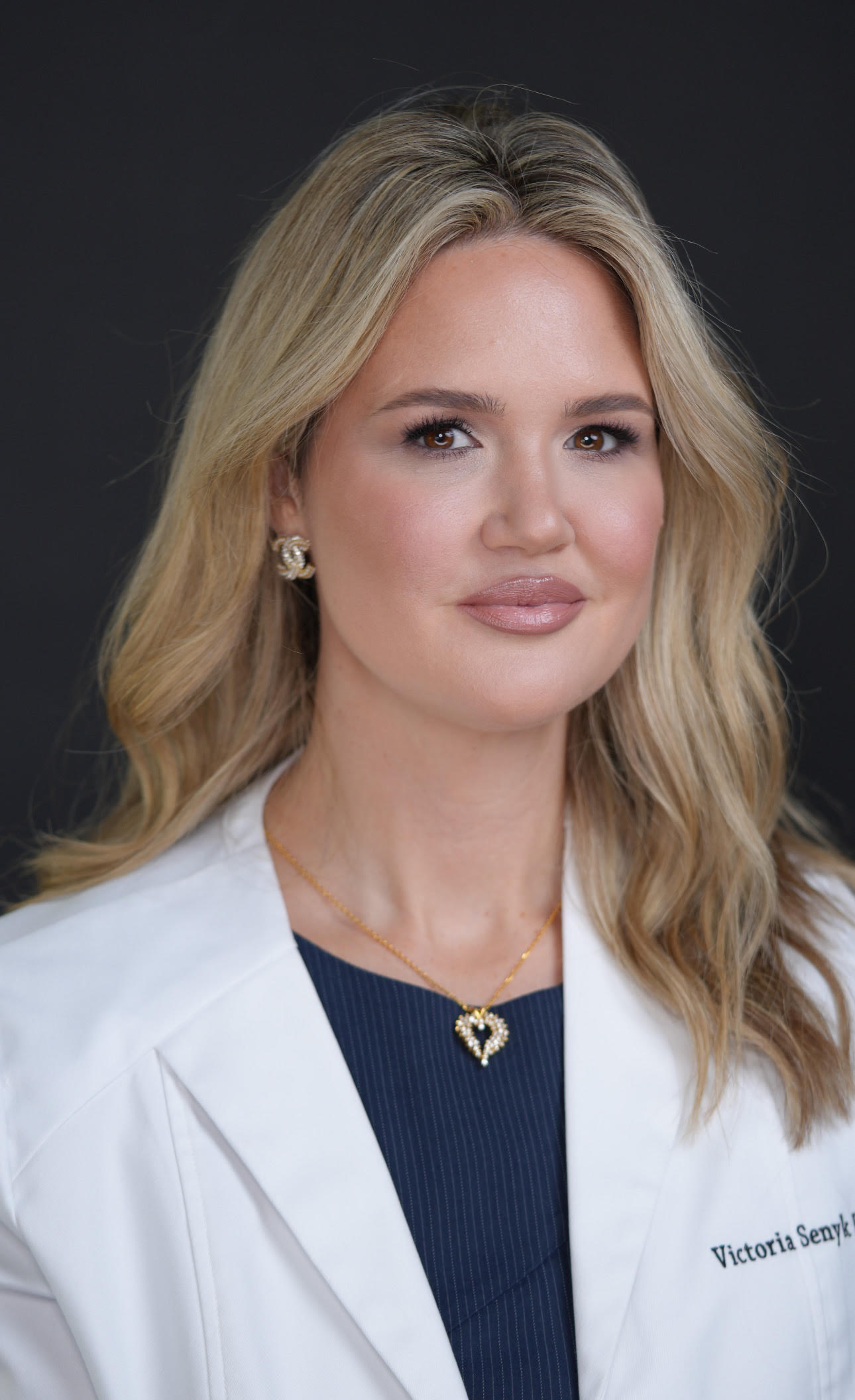
Contribution by Victoria Senyk, AGNP-C
Also Known As Skin Queen Chicago
Victoria Senyk, AGNP-C, CIDESCO Licensed Esthetician, is the founder of Aesthetics Temple and widely known as Skin Queen Chicago on Instagram.
With over a decade of experience as a board-certified Nurse Practitioner and internationally trained esthetician, she has built her reputation on combining advanced medical protocols with holistic, functional skincare. Victoria began her career in nursing after a personal encounter that inspired her lifelong commitment to cleanliness, safety, and evidence-based practice. Today, she blends her background in primary care, aesthetics, and functional medicine to create transformational treatment experiences that go beyond surface-level beauty.
Victoria is a respected educator and speaker, training professionals across the country in advanced aesthetic techniques, regenerative therapies, and functional approaches to skin health. As an active member of AmSpa and the American Academy of Anti-Aging Medicine, she continues to expand her expertise through ongoing education, cadaver courses, and hands-on residencies alongside leading functional medicine physicians. Her passion lies in empowering both patients and providers to embrace the future of aesthetics: protocols that retrain the skin, regenerate tissue, and deliver exponential outcomes.
We are living in a moment where two powerful forces are simultaneously reshaping the face. Menopause quietly depletes collagen, thinning the skin, reducing elasticity, and weakening the structural framework from within. Estrogen—once the silent architect of skin density—steps away, and the skin feels it. At the same time, GLP-1–associated weight loss is rapidly reducing adipose tissue. And while we often think of fat as something to lose, in fact, it is structural. It is support. It is signaling. It is youth. Remove it quickly, and the skin is left without its foundation. Different causes, but the same visual truth: hollowing, laxity, and skin that no longer bounces back. This is not just aging—it is a collapse of support systems.
Patients feel this shift before we even name it. They come in asking for filler, but what they really mean is, “I don’t look like myself anymore.” Increasingly, simply adding volume doesn’t fix it. Because the issue is not just what’s missing on the surface—it’s what has been lost underneath: collagen density, dermal thickness, and elastic recoil. Filling a structure that no longer has integrity is like inflating fabric that has lost its weave. It expands, but it doesn’t hold. This is where the shift in aesthetic medicine becomes essential.
Biostimulators in Medical Aesthetics
Biostimulators have become central to this evolution—not as a trend, but as a necessity. Sculptra works through a controlled inflammatory response, stimulating fibroblasts to produce collagen gradually over time. It is deliberate, requiring patience, and best suited for diffuse volume loss and global structural rebuilding. It does not offer immediate gratification, but instead teaches the skin to regenerate itself from within.
Radiesse
Radiesse, particularly in its hyperdiluted form, represents a more immediate yet equally sophisticated approach. Composed of calcium hydroxylapatite microspheres, it can be blended and delivered using a 25-gauge cannula to create a smooth, even distribution beneath the skin. In this form, it functions less as a filler and more as a collagen-stimulating matrix, improving skin thickness, elasticity, and overall resilience. This technique has become especially valuable in areas such as the lower face and neck, where laxity and crepiness are more pronounced.
Platelet-Rich Plasma
Platelet-Rich Plasma offers a different perspective entirely. Derived from the patient’s own blood, PRP delivers growth factors that support cellular repair and regeneration. Rather than inducing inflammation, it enhances the body’s natural healing processes, improving skin quality and complementing other treatments. It may not provide structural volume, but it strengthens the environment in which other treatments perform.
As aesthetic medicine evolves, so must our philosophy. More is not better—better is better. Respecting the patient means avoiding overcorrection, limiting unnecessary sessions, and choosing treatments with intention. The goal is no longer to chase youth, but to preserve strength and resilience through every decade of life. This requires a balance of science, artistry, and restraint.
Combination Therapy
One of the most significant advancements in modern practice is combination therapy. A refined approach may include a biostimulator to rebuild structure, a microdose neuromodulator to reduce repetitive strain on collagen, and a skin-quality enhancer, hyaluronic acid, to restore hydration, luminosity, and dermal integrity. Together, these treatments address movement, structure, and skin quality in a cohesive, synergistic way. This is not about doing more—it is about doing what works together.
Beyond injectables, the skin requires continuous support. As it changes through hormonal shifts or rapid weight loss, biomimetic skincare becomes essential. These formulations are designed to mirror the skin’s natural composition, supporting the barrier, enhancing collagen pathways, and maintaining hydration. What is stimulated in the clinic must be supported at home to preserve results and maintain long-term skin health.
No Simple Answer
So, to biostimulate or not? The answer is no longer a simple choice. We are not treating the same kind of aging we once were. Menopause arrives, weight loss transforms, and the skin responds whether we are ready or not. Biostimulation is not about chasing youth—it is about restoring integrity. It is about understanding the biology of the skin and responding with intention rather than excess.
The most beautiful outcomes today are not obvious. They are quiet, balanced, and resilient. They do not erase time—they move with it.