In an industry obsessed with what’s next, sometimes it pays to take another look at what is already sitting in the treatment room.
Microdermabrasion is certainly not the newest resurfacing technology. It does not have the dramatic before-and-afters associated with ablative lasers, nor does it come with the buzz surrounding RF microneedling, regenerative injectables, or the latest energy-based device. But for the esthetician who does not have medical oversight, that comparison may be missing the point entirely.
The better question might be: How much can an esthetician accomplish with one technology they can become exceptionally good at using?
Quite a bit, actually.
Professional microdermabrasion treatments can be incorporated into facial protocols, body treatments, brightening programs, chemical peel protocols, and long-term resurfacing plans. For an esthetician interested in creating a specialized practice without building a treatment room full of devices, that versatility deserves another look.
And Silhouet-Tone offers two different approaches to doing exactly that.
Professional Microdermabrasion Treatments Still Have a Place in Modern Esthetics
Microdermabrasion is fundamentally mechanical exfoliation. The objective is to remove accumulated surface cells in a controlled manner, refining the appearance of texture and creating a smoother, brighter-looking surface.
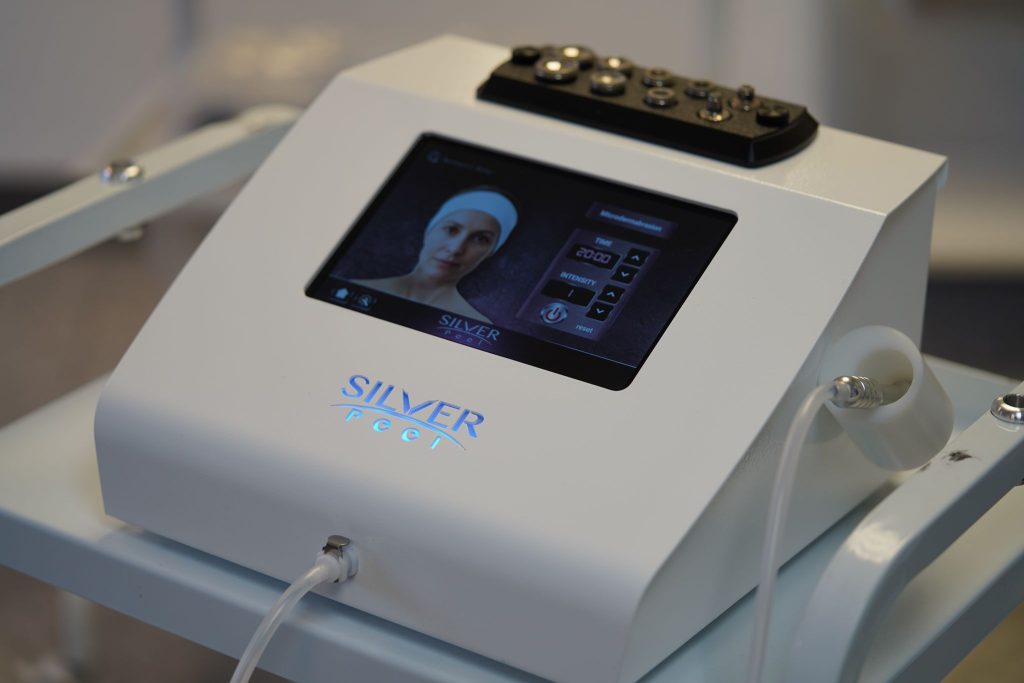
Silhouet-Tone’s Silver Peel, for example, uses stainless-steel tips with simultaneous suction to mechanically exfoliate the skin and remove dead skin cells. Its adjustable power and selection of tip abrasiveness allow the professional to customize treatment intensity. The company identifies texture, visible pores, fine lines, pigmentation irregularities, mild scarring, and superficial stretch marks among the concerns its system can help improve in appearance.
That last item should get the attention of anyone who still thinks microdermabrasion begins and ends with the face.
Professional Microdermabrasion Treatments Go Beyond the Facial
Think bigger. Literally.
The face may be the most obvious treatment area, but mechanical exfoliation has applications across the body. Depending on state scope, device indications, client candidacy, and professional training, treatment planning can potentially expand the conversation to rough texture and uneven-looking tone on areas such as the décolleté, back, arms, legs, elbows, and knees.
That creates an interesting opportunity around body brightening as well.
Areas prone to visible discoloration and uneven-looking tone, including underarms, knees, elbows and certain intimate areas where legally and professionally appropriate, are receiving considerably more attention in professional skincare. The same thinking estheticians apply to facial resurfacing can inspire carefully developed body protocols using appropriately selected professional products and exfoliation.
The device hasn’t changed categories.
The way you build a menu around it has.
One Microdermabrasion Device Can Become a Treatment Strategy
This is where we think microdermabrasion becomes much more interesting.
Instead of buying a device and putting “60-Minute Microdermabrasion Facial” on the menu, consider the technology as a foundation around which multiple services can be developed.
A professional could potentially build protocols around surface resurfacing, brightening, body exfoliation, visible texture, maintenance treatments, and combination therapies. Treatment intensity can be adjusted based on the client, treatment area, and intended outcome, provided everything remains within state scope, device instructions and professional training.
It also opens the door to combining mechanical exfoliation with other professional skincare concepts.
Microdermabrasion + Chemical Peels
Professional skincare brands have increasingly developed sophisticated resurfacing protocols that move beyond the idea that stronger automatically equals better.
In our recent guide to professional chemical peels, we looked at how modern resurfacing has expanded to include AHAs, BHAs, TCA, Jessner formulations, enzymes, brightening ingredients, growth factors, and multi-step protocols.
Microdermabrasion adds another tool to that conversation.
When a professional peel manufacturer specifically includes mechanical exfoliation within its protocol, microdermabrasion can become one component of a carefully sequenced treatment rather than the entire treatment itself. Because mechanical exfoliation can alter how skin responds to products subsequently applied, this is absolutely not an invitation to freestyle a peel cocktail. Follow the skincare manufacturer’s protocol, device instructions, and your state scope.
Chemistry does not care how confident you felt during the consultation.
Microdermabrasion + Brightening Protocols
The same opportunity exists with brightening.
Uneven-looking tone often requires more than a single appointment and more than a single approach. Professional microdermabrasion treatments can address surface buildup and texture, while appropriately selected professional brightening products address the appearance of uneven pigmentation through their own mechanisms.
This becomes particularly interesting when creating separate face and body programs.
Rather than selling a client “microdermabrasion,” the esthetician can create a multi-visit brightening program with professional treatments, targeted home care, photography, reassessment, and maintenance.
Now we’re no longer talking about a device appointment.
We’re talking about a treatment plan.
The Real Secret to Professional Microdermabrasion Treatments? The Long Game.
At L+A, we’ve been beating this drum for years: great skin is a marathon, not a sprint.
Microdermabrasion fits that philosophy particularly well.
Some clients may enjoy the immediate smoother, brighter-looking finish after a treatment, but meaningful correction of persistent visible texture or uneven-looking tone generally calls for a strategy rather than a one-off appointment.
That can mean developing a series, documenting progress, adjusting treatment intensity when appropriate, integrating home care, and periodically reassessing the client’s goals.
The broader aesthetics industry is moving in exactly this direction. As we’ve discussed in our coverage of comprehensive treatment planning, practices can move away from treating individual appointments and toward giving clients a roadmap.
For an independent esthetician, that mindset can be particularly powerful. You may not have a room filled with lasers, but you can have expertise.
More Aggressive Does Not Automatically Mean More Advanced
There is also an important distinction to make when discussing treatment intensity.
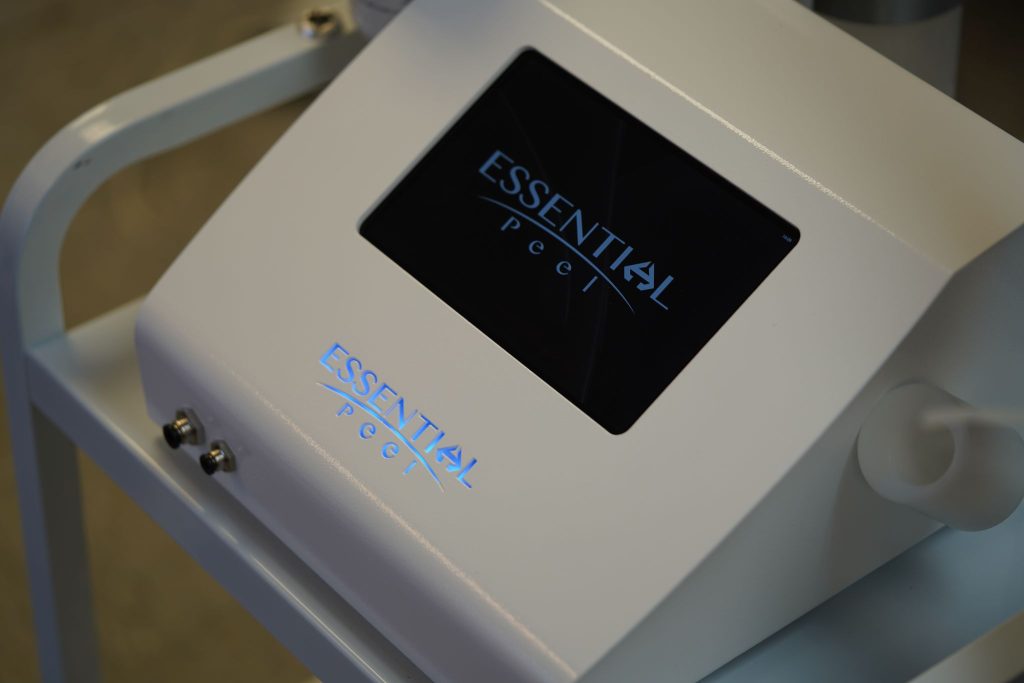
Professional microdermabrasion equipment may provide multiple levels of suction, crystal flow, or tip abrasiveness. Silhouet-Tone’s Silver Peel, for example, offers power adjustment from 1 to 10 and diamond tips ranging from fine to extra coarse. Its Essential Peel similarly offers electronic power adjustment from 1 to 10.
That does not mean the goal should be to see how aggressive you can get.
Treatment intensity must remain appropriate for the skin, treatment area, device instructions, and the professional’s legal scope. Regulations can draw a very specific line around the depth of exfoliation an esthetician may perform. (MBC)
The sophistication is in knowing how to customize, not simply how to turn something up.
That philosophy aligns with the larger conversation happening throughout aesthetics. In L+A’s recent look at the shift from resurfacing to regeneration, Dr. Abdulrahman Abdulbaky discussed how modern aesthetics is increasingly considering tissue quality, inflammation and regeneration rather than measuring sophistication by the amount of injury created.
Two Silhouet-Tone Systems, Two Approaches to Microdermabrasion
Silhouet-Tone has been manufacturing professional esthetic, electrolysis, and spa equipment for nearly 50 years, and the company says its support extends beyond equipment to marketing, technical support, training, and follow-up.
Its current microdermabrasion lineup gives professionals a choice between two different approaches.
Silver Peel: Crystal-Free Professional Microdermabrasion Treatments
Precision Through Tips + Suction
Silhouet-Tone’s Silver Peel takes the crystal-free approach.
The compact system uses biocompatible stainless-steel tips to mechanically exfoliate the surface while suction simultaneously removes dead skin cells. Digital power adjustment ranges from 1 to 10, allowing the professional to customize treatment according to skin sensitivity, treatment area, and desired level of exfoliation.
The handpiece accepts multiple stainless-steel tips, which Silhouet-Tone says are easy to clean and sterilize. Diamond tips are also available in multiple sizes and levels of abrasiveness, ranging from fine through extra coarse.
For the esthetician building a streamlined practice, there is another practical advantage: no crystals to continually replace. Silhouet-Tone specifically positions Silver Peel as a compact, cost-effective option with reduced consumable requirements.
Essential Peel: The Crystal Microdermabrasion Approach
Professional Microdermabrasion Treatments With TURBO FLOW
For professionals who prefer crystal microdermabrasion, Essential Peel takes a different route.
Its TURBO FLOW system maintains controlled circulation of corundum crystals to promote consistent exfoliation. The system offers electronic power adjustment from 1 to 10 and can be used with high-purity corundum crystals, different tips based on the treatment area, and, depending on the selected protocol, a crystal-free mode.
According to Silhouet-Tone, the corundum crystals have a purity level of 99.24% with a professional-grade 120-micron particle size. The system also incorporates two sizes of disposable tips, HEPA filters, and sound-insulated housing.
Like Silver Peel, Silhouet-Tone positions Essential Peel for refining visible texture, brightening the complexion, and improving the appearance of fine lines, pigmentation irregularities, mild scarring, and superficial stretch marks.
The Niche Practice Might Be the Smart Practice
There will always be another device.
Another wavelength. Another handpiece. Another technology promising to revolutionize the treatment room.
For an independent esthetician, however, building a successful practice does not necessarily require owning all of them.
There is something compelling about choosing one versatile modality, becoming exceptionally educated in it, and learning how to build thoughtful protocols around it. With professional microdermabrasion treatments, that expertise can potentially span face and body, resurfacing and brightening, standalone services and manufacturer-approved combination protocols.
It also reinforces something we’ve discussed in L+A’s Out of Scope. Not Out of the Game. Education: estheticians do not have to perform every medical aesthetic procedure to remain relevant in an increasingly advanced industry.
Know the skin. Know your device. Know your products. Know your scope. Then get really, really good at putting those pieces together.
Because the most advanced treatment room isn’t necessarily the one with the most machines.
Sometimes, it’s the one with the best plan.