The Real Conversation Happening in Aesthetics
At every major industry event, there is the official conversation, and then there is the real one.
The official conversation is what appears on stage, in product launches, and across polished booth presentations. The real conversation is what starts to emerge when you step back and look at the themes repeating themselves across education, technology, and clinical discussion. After attending AmSpa 2026, the message felt clear. Medical aesthetics is moving into a more integrated, more intelligent, and more whole-person future.
What stood out to me most was not one device, one injectable, or one trend cycle. It was the continued convergence of aesthetics with wellness, longevity, and systems that support a more comprehensive model of care. The field is no longer focused only on treating what patients see in the mirror. It is increasingly interested in how patients are aging overall, and how practices can better support that process from both a clinical and operational standpoint. This theme emerged here, continuing what we have seen so far this year, starting at IMCAS in Paris in January and IECSC/ Be Well in New York City in March.

Esthetician in Plastic Surgery Office Reviews L+A
Michael Razzano, Medical Esthetician in Plastic Surgery Office
Working as the only esthetician in my practice can feel overwhelming, and I love that L+A gives estheticians a platform to educate, inspire, and share their experiences. I’ve learned so much from my peers through L+A that’s allowed me to perfect my craft and be a better provider for my clients. L+A creates an amazing community for estheticians that want to learn, grow, and increase visibility to our amazing industry.
Wellness Is No Longer Peripheral
One of the strongest themes I noticed was the ongoing integration of wellness and whole body health into aesthetic medicine. That shift is becoming harder to ignore. Conversations around aesthetics are expanding beyond wrinkle reduction, volume restoration, and skin quality alone. There is growing attention on the role of stress, inflammation, metabolic health, recovery, and lifestyle in how patients look, feel, and age.
That broader lens matters. Patients are becoming more educated, more curious, and more interested in care that feels connected rather than fragmented. They are not only asking what treatment will help them look better today. They are also asking how to age better over time. They want to understand how longevity strategies, meditation, hormonal balance, sleep, and internal health may influence the external aging process. That is changing the tone of aesthetic medicine in a meaningful way.
Never Miss An Article – Get On The VIP Email List
A More Mature Model of Care
To me, this reflects a more mature direction for the industry. Aesthetics is beginning to move away from a purely surface-level model and toward one that recognizes the face does not age separately from the body. Tissue quality, inflammation, resilience, prevention, and long-term vitality are becoming part of the same conversation. That does not mean every aesthetic practice needs to transform into a full-scale wellness center. It does mean the most forward-thinking practices are paying closer attention to the overlap between beauty, biology, and overall health.
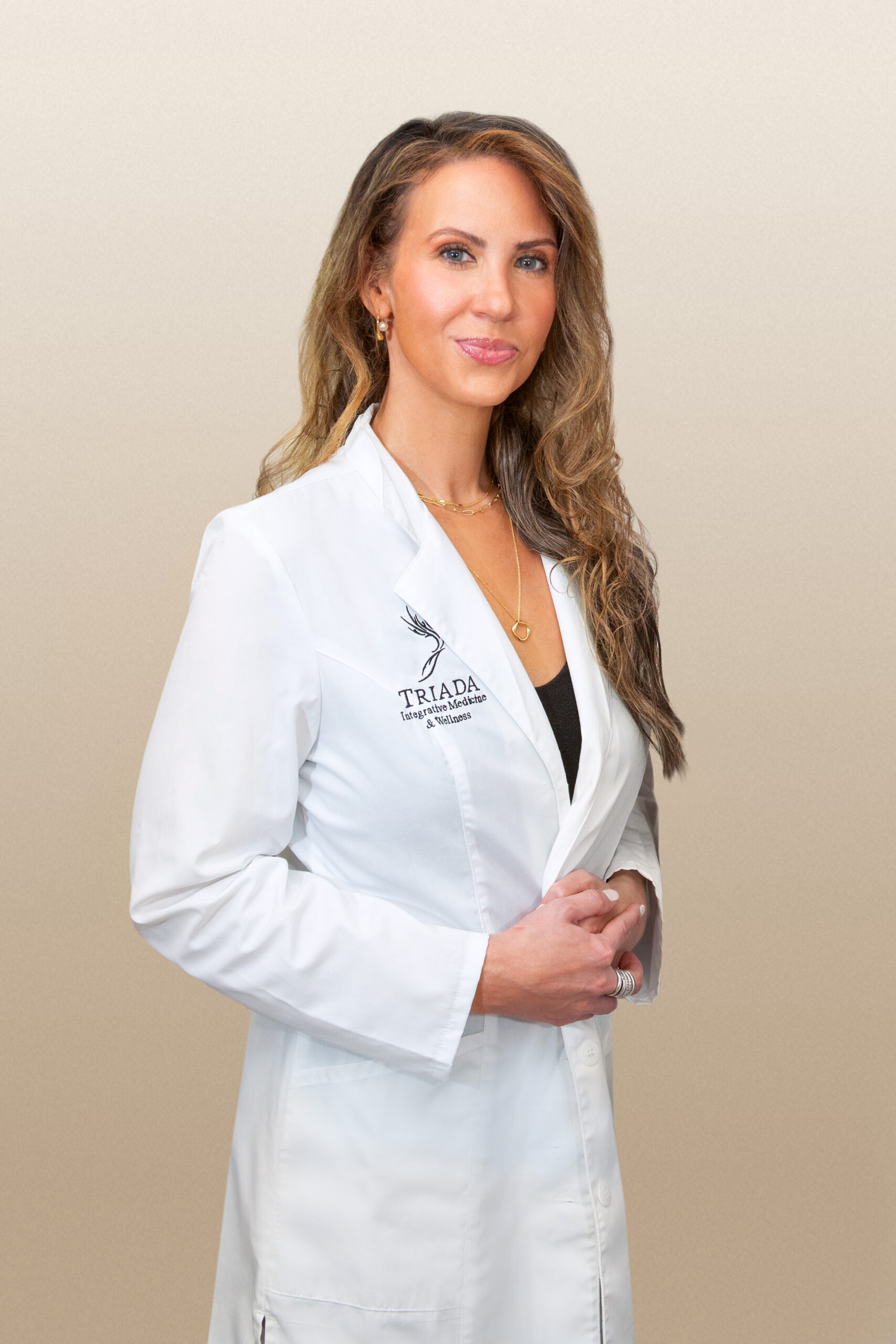
Dr. Krystal Briglia, L+A Medical + Wellness Contributor
Dr. Krystal Briglia of Triada Integrative Medicine + Wellness is a board-certified nurse practitioner specializing in aesthetic dermatology, integrative medicine, and wellness. She has an extensive and diverse background in healthcare, with over a decade of experience working in emergency, critical care, trauma, aesthetics, healthcare administration, and healthcare education. Krystal holds multiple board certifications, including family practice, emergency, and critical care. Her educational background includes two undergraduate degrees, a degree in health sciences, and a bachelor’s degree in nursing from the University of Delaware. She holds three graduate-level degrees, including a master’s degree in nursing leadership, a master’s degree in business administration, and completed her nurse practitioner education at the University of Massachusetts. In 2016, Krystal completed her clinical doctorate in nursing practice. Dr. Briglia is an entrepreneur and specializes in organizational process improvement. She is a Lean Six Sigma master black belt, a certified Six Sigma champion, and a certified Kaizen facilitator. She also has a passion for education and spent 6 years teaching health profession graduate-level courses. During that time, she held a lead faculty position and helped the university develop a family nurse practitioner program from inception to credentialing and first graduates. Read Full Bio
AI Has Entered the Field in Earnest
The other major takeaway was the visibility of artificial intelligence across nearly every corner of the field.
AI no longer feels like a future concept in medical aesthetics. It feels like an active layer being built into the patient experience and the business infrastructure around it. What stood out to me was how broad those applications are becoming.
AI in the Consultation Room
On the clinical and consultation side, AI is increasingly being used in visual assessment tools that can analyze patient photos, simulate likely outcomes, and help illustrate how a patient may age with or without treatment. That is significant. In the right hands, those tools can improve the consultation process by making treatment planning more visual, more personalized, and easier for patients to understand.
Of course, these technologies should be used thoughtfully. A simulated result is not a guarantee, and no digital rendering replaces anatomy, clinical judgment, or informed consent. Still, the potential is clear. When used appropriately, AI-supported imaging may help create more realistic conversations and more strategic long-term planning rather than impulsive, isolated treatment decisions.
AI Behind the Scenes
Beyond the consultation room, AI is also becoming embedded in the operational side of aesthetic practice. That may be where its impact is felt even faster. Practices are exploring AI for booking, calls, front desk support, automated communication, patient follow-up, and virtual receptionist tools designed to reduce friction and improve consistency. As medical aesthetics continues to grow, that kind of infrastructure becomes increasingly important.
This shift reflects a larger truth about the industry. Medical aesthetics is not only a clinical field. It is also a systems-driven one. Patient experience is shaped not just by the injector or provider, but by the process surrounding the visit. Scheduling, responsiveness, follow-through, accessibility, and education all matter. AI is beginning to position itself as a support tool in that ecosystem, not as a replacement for human care, but as an operational layer that can help practices function more efficiently and more intelligently.
Where the Industry Appears to Be Heading
Taken together, these trends point to where the field appears to be heading next.
Medical aesthetics is evolving into a more integrated model that combines appearance, prevention, wellness, regenerative thinking, and intelligent technology. That creates a real opportunity. It allows providers to think more broadly about aging, to educate patients more effectively, and to build practices that are better equipped to deliver consistent, modern care.
Innovation Still Requires Restraint
It also creates responsibility.
As the field expands into wellness and adopts more AI-driven tools, it will need to stay grounded in evidence, ethics, and restraint. Not every trend deserves immediate adoption. Not every platform improves care simply because it is innovative. And not every new wellness concept belongs inside aesthetic medicine without thoughtful clinical consideration.
That is why events like AmSpa matter. They offer more than exposure to what is new. They offer insight into what the industry values, where momentum is building, and what questions providers will need to answer next.
Final Takeaway
My biggest takeaway from AmSpa 2026 is that medical aesthetics is becoming more comprehensive in every sense. More connected to whole body health. More interested in longevity. More is supported by intelligent systems. And more focused on helping patients navigate aging in a way that feels proactive, personalized, and informed.
That is where the field is heading. Not simply toward more treatment, but toward a more complete model of care.