
The Photobiology of Great Skin
LED for Acne, Skin Rejuvenation, Atopic Dermatitis, and Eczema.
Light-emitting diode (LED) therapy, also called low-level light therapy or photo biomodulation, has become a cornerstone of modern dermatology for its non-invasive ability to improve various skin conditions. By delivering precise wavelengths of visible or near-infrared light, LEDs stimulate cellular activity without causing heat or tissue damage. The key wavelengths: blue (~415nm), red (~633nm), and near-infrared (~830nm) modulate inflammation, accelerate healing, and rejuvenate the skin. This article outlines the evidence and mechanisms of LED therapy in three major indications: skin rejuvenation, atopic dermatitis (eczema), and acne.
November 2025 L+A Report
Devices That Drive Long-Term Results
We’re diving deeper into the role of device technology within those treatment plans. Because while home care keeps the daily rhythm going, devices are the accelerators—the catalysts that make visible, measurable progress possible.
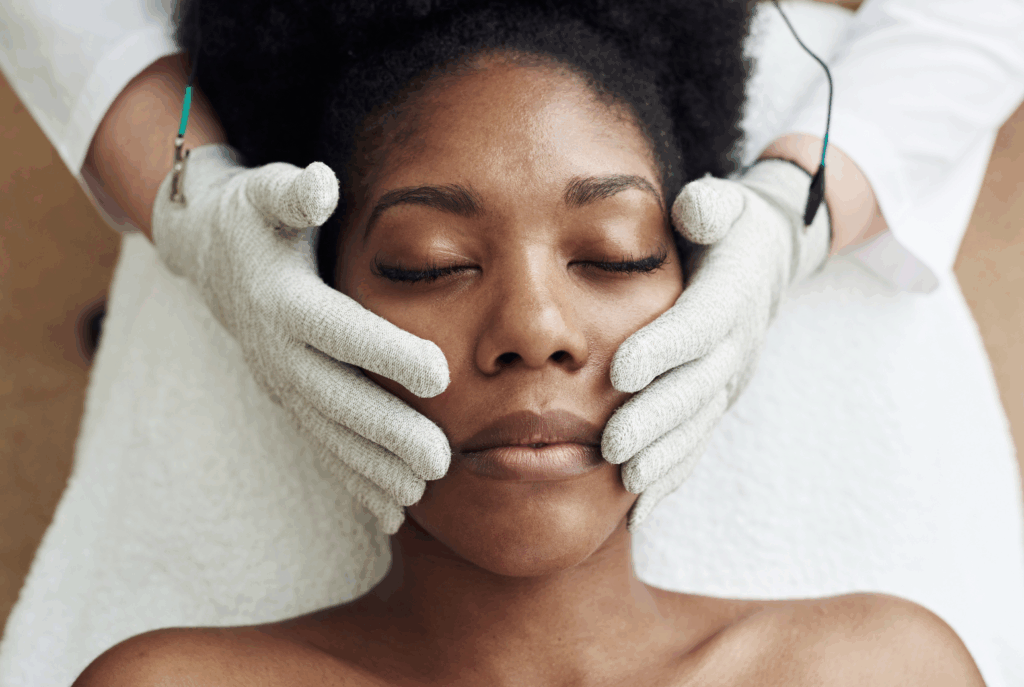
Across the medical + spa skincare industry, professionals are blending advanced modalities like microneedling, lasers for hair removal, microcurrent, LED, and microchanneling into long-term strategies that are both corrective and preventive. These technologies are not meant for quick fixes; they’re the foundation of consistency—the cornerstone of skin fitness.
(Table 1 summarises the primary wavelengths and their skin targets and effects.)
| Wavelength (nm) | LED Light Color | Targeted Skin Concern | Biological Actions / Mechanisms |
| ~415 nm | Blue | Acne (Propionibacterium/C. acnes) | Porphyrin absorption → reactive oxygen species (ROS) generation; kills acne bacteria. Mild sebostatic effect and some anti-inflammatory action. |
| ~633 nm | Red | Skin aging (wrinkles, photoaging); inflammatory lesions (acne, rosacea) | Fibroblast stimulation → increased collagen & elastin synthesis boosts growth factors (e.g., TGF-β, PDGF); reduces inflammation via cytokine modulation; promotes cell proliferation and blood circulation for healing. |
| ~830 nm | Near-Infrared | Deeper tissue repair (rejuvenation, wound healing); inflammatory skin (eczema, psoriasis) | Deep penetration (up to ~10 mm); absorbed by mitochondrial enzymes (e.g., cytochrome c oxidase) → increases cellular ATP and metabolism; immunomodulatory (reduces pro-inflammatory cytokines IL-4, IFN-γ, etc.); enhances microcirculation and tissue regeneration. |
LED For Acne Management
Acne vulgaris was among the first conditions successfully treated with LEDs. Blue light (~415nm) excites porphyrins within Cutibacterium acnes, producing singlet oxygen and reactive oxygen species that destroy bacterial membranes. Red light (~633nm) penetrates deeper, reducing inflammation, promoting healing, and improving residual redness or scarring.
Together, blue + red LED for Acne tackles multiple acne factors—microbial load, inflammation, and tissue recovery. Red light also boosts fibroblast activity and growth factor release, aiding repair of post-acne lesions and supporting collagen regeneration.
Clinical Findings LED For Acne:
Studies consistently demonstrate significant improvements in inflammatory acne:
- Goldberg & Russell found ~70% reduction in lesion count after 4–8 weeks of twice-weekly blue/red LED sessions.
- An open-label trial using narrowband blue light achieved a 53% reduction by week 8, increasing to 60% by week 12, with minimal side effects.
- Red light alone (635–670nm), used daily for 8 weeks, reduced inflammatory lesions by 66% on the treated side in a split-face trial.
Combination blue-red therapy typically produces superior and longer-lasting results, comparable to or better than topical benzoyl peroxide, without irritation or dryness.
LED therapy for Acne is ideal for patients intolerant to conventional medications or seeking a non-pharmacological option. Improvements often persist for weeks after treatment cessation, reflecting the cumulative biological effects of photo biomodulation.
LED therapy represents a scientifically grounded, safe, and effective approach to treating common dermatologic conditions.
Blue and red light effectively treat acne, targeting bacterial overgrowth and inflammation while supporting tissue healing.
Red and NIR light rejuvenate aging skin through collagen induction and dermal remodelling.
Blue, red, and NIR light offer an emerging, UV-free adjunct for atopic dermatitis, calming inflammation and aiding barrier repair.
LED for Skin Rejuvenation
Red (630–660nm) and near-infrared (830nm) light penetrate the dermis to activate fibroblasts and vascular networks. These wavelengths interact with mitochondrial chromophores, enhancing cellular energy (ATP) and triggering signalling pathways that promote collagen synthesis and tissue repair.
In vitro studies show that 633nm red light boosts type I procollagen while reducing matrix-degrading enzymes (MMP-1 and MMP-2). It also suppresses inflammatory mediators like COX-2 and IL-1α in keratinocytes. Near-infrared light (830nm) penetrates deeper, improving mitochondrial activity and reducing inflammatory cytokine production (IL-2, IL-4, IFN-γ). Together, these effects promote collagen and elastin production, improved circulation, and dermal remodelling.

Contribution by Jacine Drummond
Jacine is the award-winning cosmetic chemist and visionary founder of Roccoco Botanicals, a brand redefining how we treat acne and sensitive skin. Her passion was sparked by her personal battle with cystic acne beginning at age 14, a journey marked by countless failed treatments. Driven by frustration, she pursued postgraduate studies in cosmetic chemistry, uncovering that most acne products were not formulated to truly support compromised skin.
Her commitment deepened when her own children faced skin challenges—her son with eczema and her daughter with cystic acne—solidifying her mission to create skin-loving solutions where the market had fallen short. With over two decades as a beauty therapist and chemist, Jacine has become an industry innovator, winning multiple international awards and earning global recognition. Today, she leads Roccoco Botanicals at the forefront of skincare science, dedicated to developing bioactive, effective formulations for those underserved by conventional skincare.
Clinical trials confirm these mechanisms. In a split-face, placebo-controlled study of 76 participants, red (633nm), infrared (830nm), or combined LED treatments, applied twice weekly for 4 weeks, reduced wrinkle depth by up to 36% and increased elasticity by 19%. Biopsies showed increased collagen density, active fibroblasts, and upregulation of tissue inhibitors of metalloproteinases (TIMP-1 and TIMP-2).
Patients consistently report a smoother texture and a firmer tone, without downtime or discomfort. The most common minor effects are temporary redness or dryness. Since LEDs emit non-UV, non-thermal light, they are safe for all skin types, though protective eyewear is recommended. Results are cumulative and gradual, requiring multiple sessions and maintenance. LEDs should be positioned as a supportive treatment within a broader rejuvenation plan rather than a standalone anti-aging solution.
LED for Atopic Dermatitis and Eczema
Atopic dermatitis (AD) involves chronic inflammation driven by an overactive Th2 immune response and barrier dysfunction. While UV phototherapy has long been used, visible and infrared LEDs provide a UV-free alternative to reduce inflammation and support barrier repair.
- Blue light (415–450nm) targets the epidermis and upper dermis, reducing T-cell activation and cytokine release.
- Red (633nm) and near-infrared (830nm) penetrate deeper, modulating immune activity and improving microcirculation.
LED therapy decreases inflammatory cytokines (IL-4, IL-10, IFN-γ) and normalizes immune balance between Th1 and Th2 pathways. In animal studies, 850nm LEDs reduced multiple cytokines and alleviated dermatitis symptoms. Red light enhances keratinocyte proliferation and barrier recovery, while blue light helps regulate surface bacteria such as Staphylococcus aureus, a known trigger for eczema flares. Increased oxygenation and blood flow from NIR wavelengths further accelerate healing.
A randomized German trial treated chronic eczema with 453nm blue light thrice weekly for four weeks, showing a statistically significant reduction in lesion severity compared with untreated controls (mean score decrease 1.9 vs. 1.3; p=0.015). No adverse reactions or UV-like damage occurred. Additional laboratory and pilot studies suggest that red (660nm), green (525nm), and NIR (830nm) LEDs can lower Th2 cytokines, decrease IgE levels, and visibly improve skin condition. However, larger clinical trials are still needed to validate optimal treatment parameters.
LED therapy for eczema should currently be considered an adjunct, not a primary treatment. It may offer steroid-sparing benefits for chronic or localized lesions and help maintain remission. Blue and red light are safe for atopic skin, though rare cases of post-inflammatory hyperpigmentation have been noted in darker tones. Proper eye protection and patch testing are advisable. LED treatments can complement standard eczema management by calming inflammation, enhancing barrier function, and reducing itch, especially in patients seeking non-pharmaceutical alternatives.
The advantages of LED therapy include no pain, no downtime, and suitability for all skin types, making it a versatile tool in both aesthetic and therapeutic dermatology. For best results, professionals should tailor wavelengths to individual skin concerns and educate clients that LED therapy delivers gradual, cumulative improvements. As research evolves, LED treatment protocols will continue to be refined, solidifying light therapy as a cornerstone of modern skin health management.